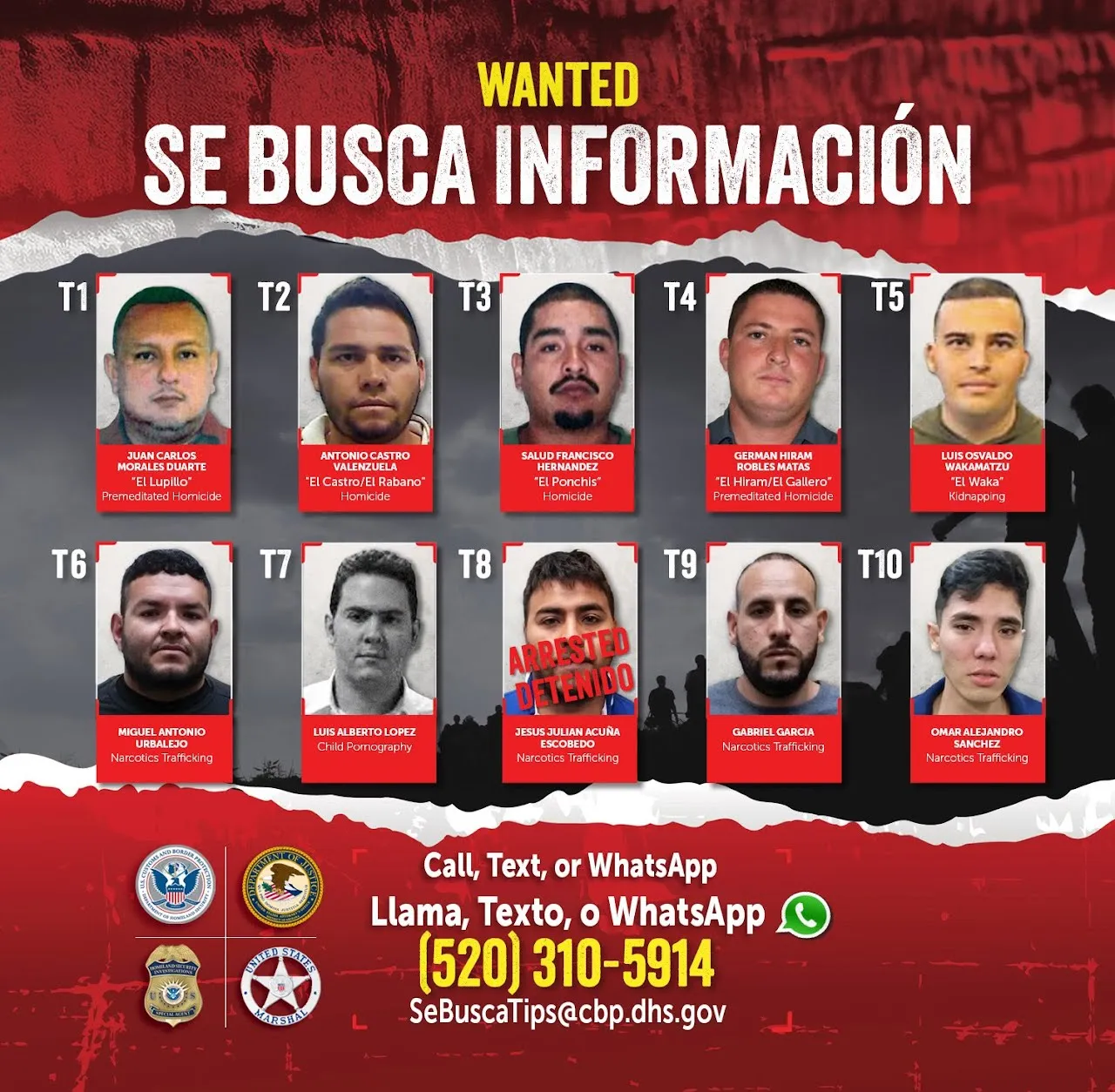
Mexican cartels test deadly new Fentanyl on homeless and animals before flooding market
Los cárteles mexicanos prueban un nuevo y letal fentanilo en personas sin hogar y animales antes de inundar el mercado
A new report has found that the Sinaloa cartel, run by the notorious Joaquin 'El Chapo' Guzman, is using impoverished people in Culiacán, Mexico, as test subjects.
Mexican cartels are reportedly using homeless people and animals as test subjects in a bid to control the fentanyl drug trade, following a shortage of drug ingredients from China.
A recent report reveals that impoverished individuals in Culiacán, along with animals such as rabbits and chickens, are being used by the Sinaloa cartel for testing purposes, reports the Daily Star.
Gang members are enticing vulnerable people with offers of just $30 to trial dangerous experimental fentanyl formulas, often resulting in severe reactions or death.
In makeshift "labs," the gangs create mixtures with experimental additives like animal tranquilizers such as xylazine, aiming to produce a potent product.
Animals are injected to measure a drug's strength using arbitrary conclusions--if a hen or rabbit survives longer than 90 seconds, the batch is considered weak, according to the New York Times.
Experts have warned that such experimentation will only exacerbate addiction issues or result in fatalities.
It is estimated that between 100,000 and 200,000 Americans will die from synthetic opioid overdoses this year, most from consuming fentanyl
Un nuevo informe ha descubierto que el cártel de Sinaloa, dirigido por el famoso Joaquín "El Chapo" Guzmán, está utilizando a personas empobrecidas de Culiacán, México, como sujetos de prueba.
Según informes, los cárteles mexicanos están utilizando a personas sin hogar y animales como sujetos de prueba en un intento de controlar el tráfico de drogas fentanilo, luego de una escasez de ingredientes de drogas provenientes de China.
Un informe reciente revela que individuos empobrecidos en Culiacán, junto con animales como conejos y pollos, están siendo utilizados por el cártel de Sinaloa para fines de pruebas, informa el Daily Star.
Los miembros de las pandillas están tentando a personas vulnerables con ofertas de tan solo 30 dólares para que prueben peligrosas fórmulas experimentales de fentanilo, que a menudo resultan en reacciones graves o la muerte.
En "laboratorios" improvisados, las pandillas crean mezclas con aditivos experimentales como tranquilizantes para animales como la xilacina, con el objetivo de producir un producto potente.
Se inyecta a animales para medir la potencia de una droga utilizando conclusiones arbitrarias: si una gallina o un conejo sobreviven más de 90 segundos, el lote se considera débil, según el New York Times.
Los expertos han advertido que este tipo de experimentación solo exacerbará los problemas de adicción o resultará en muertes.
Se estima que entre 100.000 y 200.000 estadounidenses morirán por sobredosis de opioides sintéticos este año, la mayoría por consumir fentanilo.
The video that Hamas terrorists don’t want you to see:
Posted by StandWithUs on Wednesday, March 26, 2025
#redgym
#22s
According to a 2019 report by the Mexican NGO Luchadoras, 10,000 women and girls are victims of sextortion in Mexico every year².
- Sextortion is a crime in Mexico, punishable by up to six years in prison, but it is rarely reported or prosecuted due to fear, shame, stigma, and lack of trust in the authorities²³. Many victims do not know their rights or how to seek help, and some are even blamed or revictimized by the police or the judiciary²³.
- Some initiatives have been launched to fight sextortion and support the victims in Mexico, such as the campaign #NoTeCalles (Don’t Stay Silent), which provides legal and psychological assistance, as well as a hotline and a chatbot to report cases and receive guidance⁴⁵. Another example is the project #NoSoyTuPorno (I’m Not Your Porn), which aims to raise awareness and educate young people about the risks and consequences of sextortion
"
University of Wisconsin-Madison have been targeted by sex traffickers who use social media to lure them into fake modeling opportunities.
- [Los Gomelos restaurant]: A Mexican restaurant in Madison that was shut down in 2019 after federal agents raided it for allegedly being involved in a drug and human trafficking ring.
- [Garibaldi Restaurant]: A Mexican restaurant in Madison that was also raided in 2019 for the same reason as Los Gomelos.
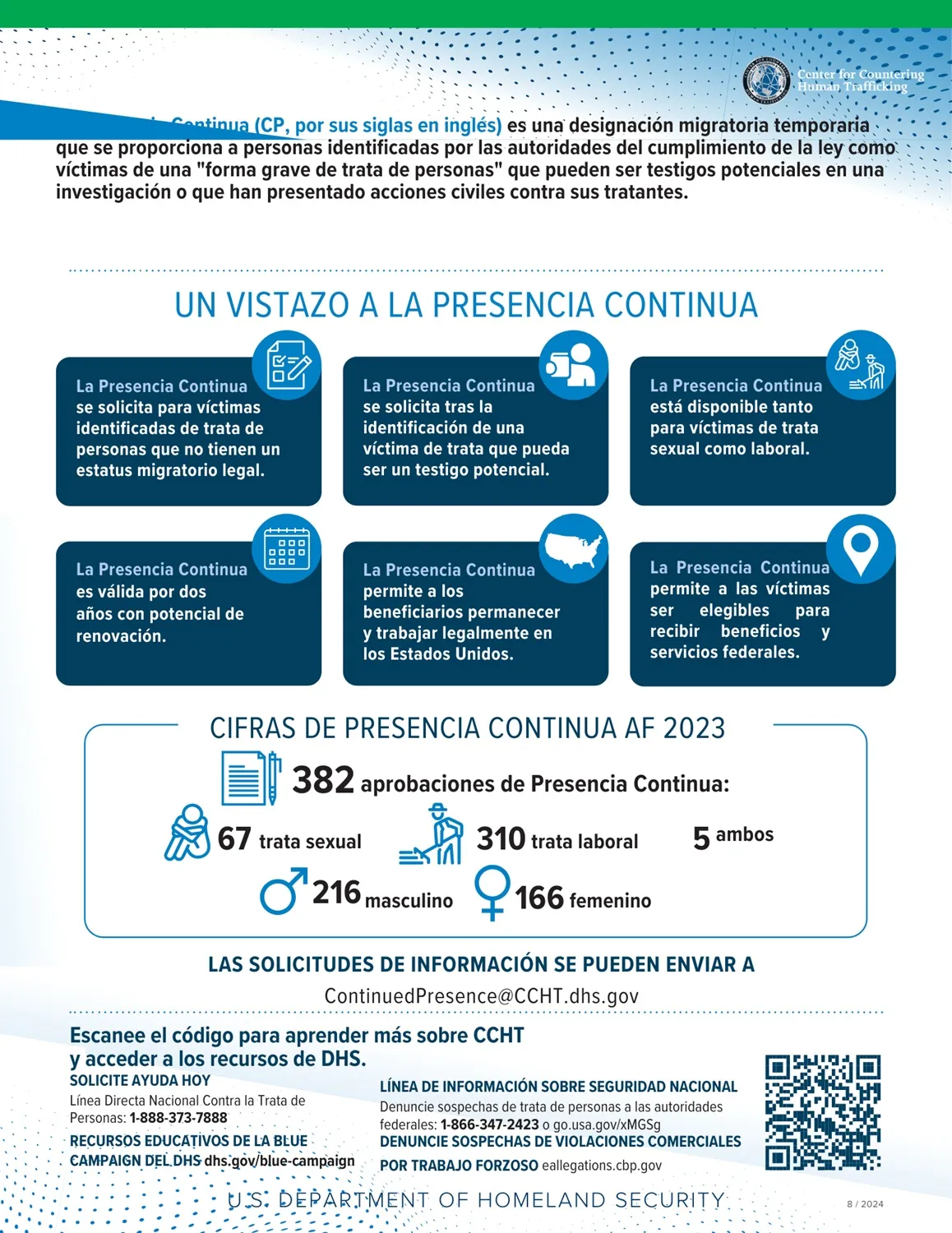
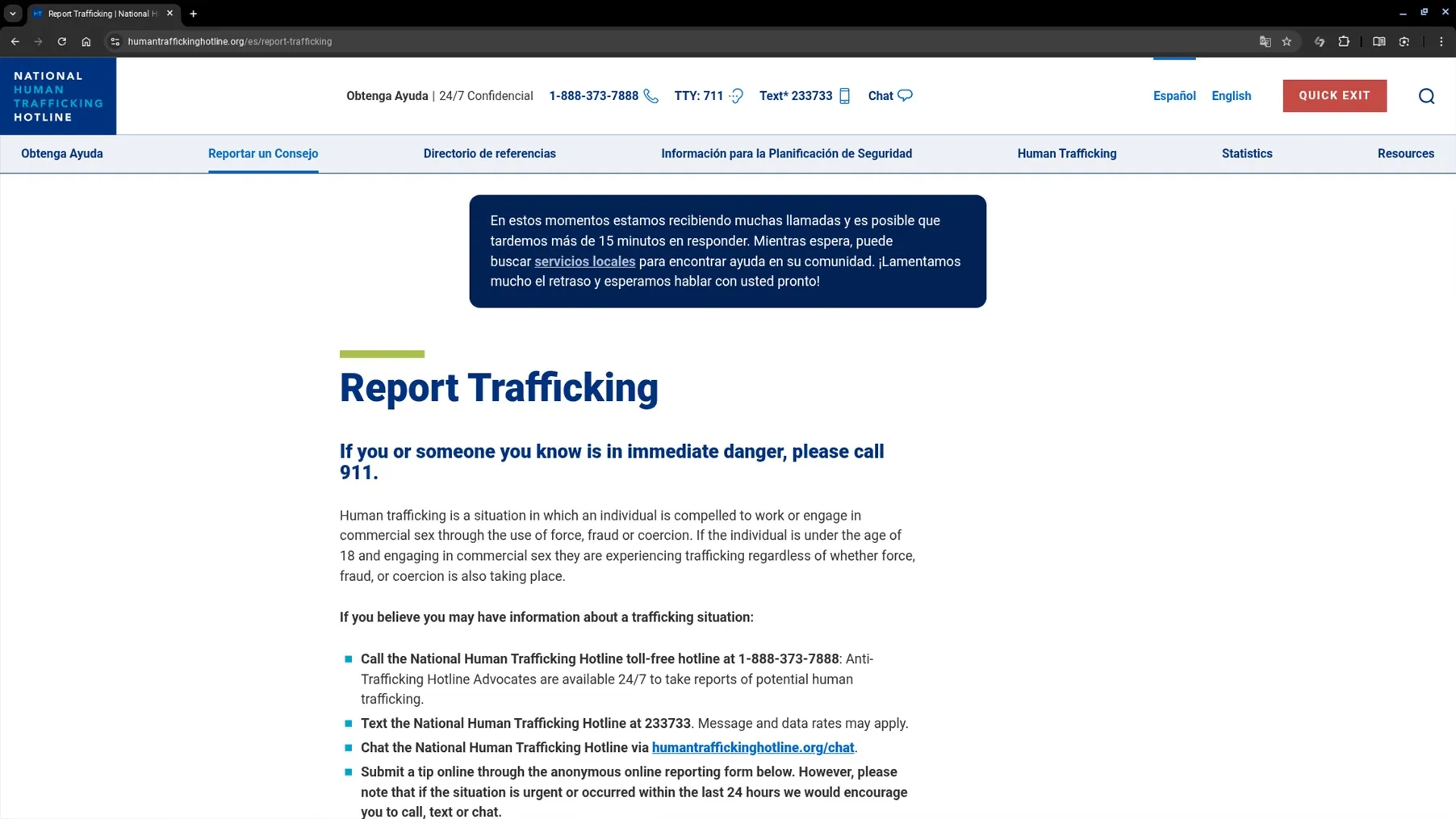
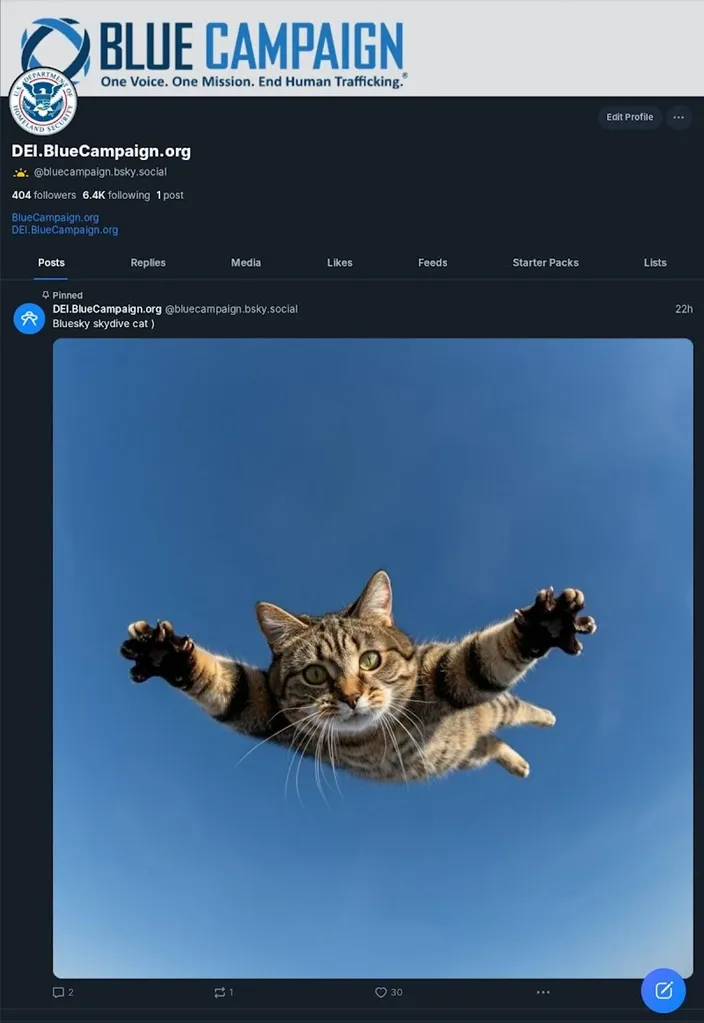
- [Blue Campaign] (dhs.gov/bluecampaign): A national public awareness campaign by the Department of Homeland Security that educates the public on how to recognize and report human trafficking. The campaign has partnered with the [Edgewater Hotel] and the [Graduate Hotel] in Madison to train their staff and display awareness materials. [Not Trained]
- [#stopsextortion]: A hashtag campaign by the FBI that warns teens about the dangers of online sexual exploitation and blackmail.
- [UW SAFEwalk]: A free service that provides walking escorts to students, faculty, staff, and visitors on the UW-Madison campus at night. "
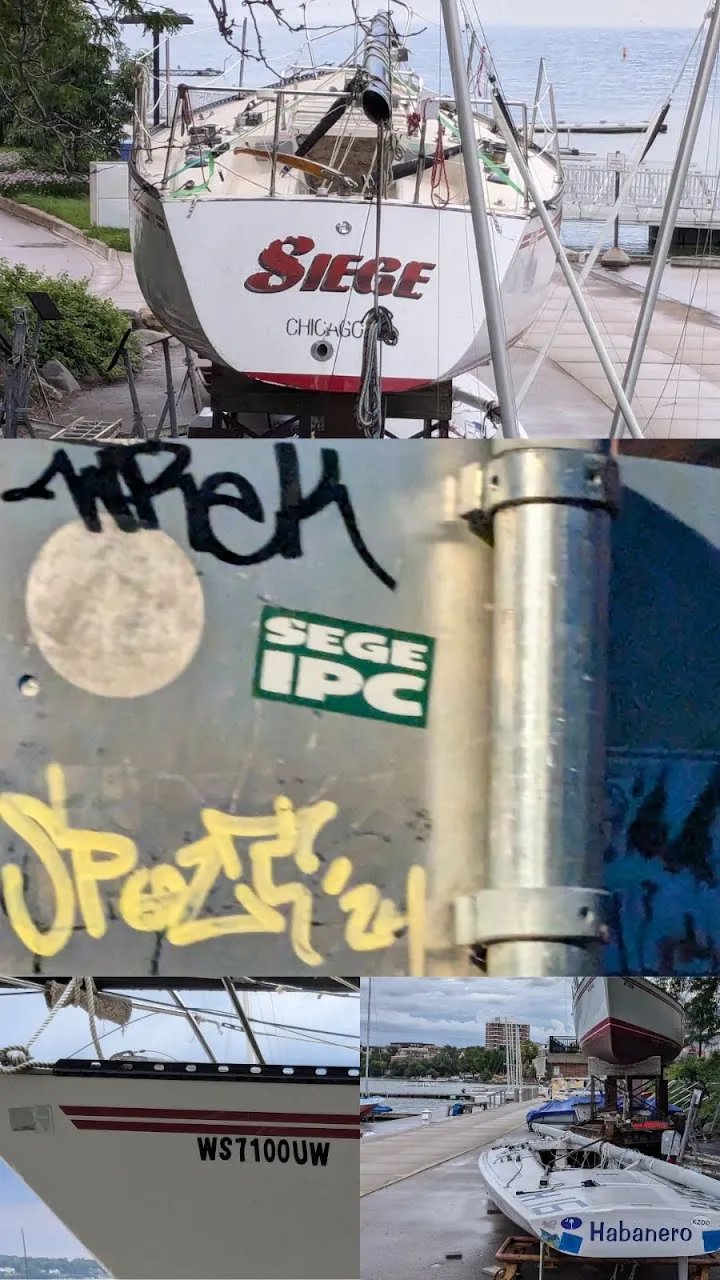
#salsa #NoTeCalle #polarisproject #A21 #ourrescue #OnePillCanKill #MigrantCRIME #Maha #salsaromantica #salsachallenge #money #border #BorderCrisis #BorderCzar #BorderSecurity #cbp #Justthinktwice #getsmartaboutdrugs #campusdrugprevention #lakenriley #RAINN #AA #fentanyl #xylazine #asustir #DEI #diversity #asu #Vdlf #devilbadger #wrekai #siege #uwmadison #Badgers #badgersafe #casa #trampa #carne
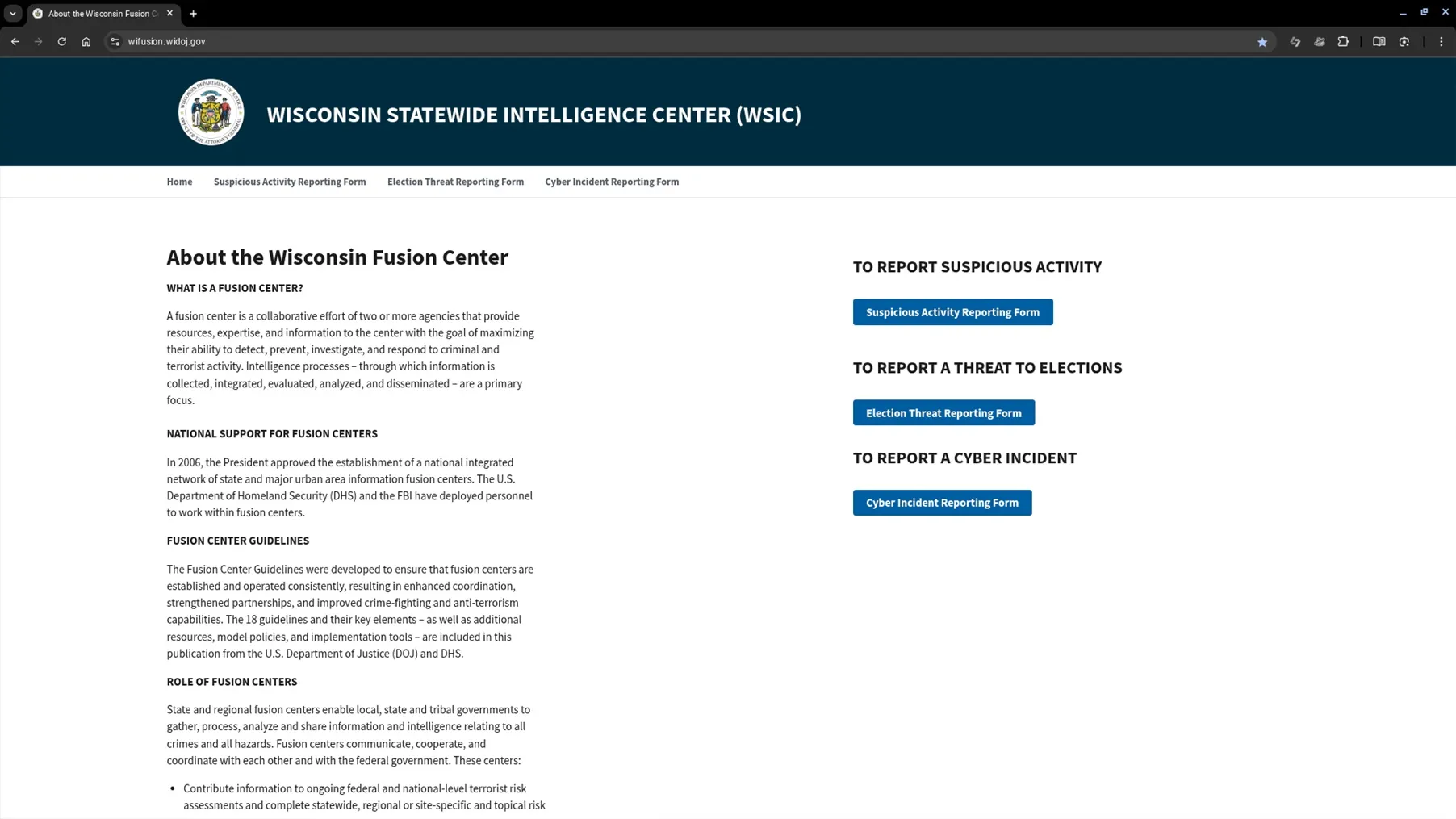
U.S. Immigration and Customs Enforcement (ICE) established the Victims Of Immigration Crime Engagement (VOICE) Office to acknowledge and serve the needs of victims and families who have been affected by crimes committed by individuals with a nexus to immigration violations. The VOICE Office serves as a comprehensive support system that provides assistance and resources to individuals victimized by criminal illegal aliens. The VOICE Office is not a tip line, but ICE will accept tips related to immigration and criminal violations, here.
The VOICE Office focuses on three objectives
Using a victim-centered approach to acknowledge and support immigration crime victims and their families.
Promoting awareness of services available to immigration crime victims.
Building collaborative partnerships with community stakeholders assisting immigration crime victims.
Services Provided
The VOICE Office helps victims of crime and families impacted by crimes committed by illegal aliens by:
Sharing local contacts to help with unique victim requests for resources and referrals.
Explaining to victims what information is available and helping victims understand the immigration enforcement and removal process.
Providing access to social service professionals who can refer victims to resources and service providers.
Helping victims sign up to receive automated custody status information on criminal aliens in ICE custody. The DHS Victim Information and Notification Exchange (DHS-VINE) is an automated service that helps victims track criminal aliens’ custody status.
Providing additional criminal or immigration history about illegal aliens to victims or their families when possible. In some instances, case information may be protected from disclosure by law or policy.
On March 9, 2025, in support of President Trump’s executive orders prohibiting anti-Semitism, and in coordination with the Department of State, U.S. Immigration and Customs Enforcement arrested Mahmoud Khalil, a former Columbia University graduate student. Khalil led activities…
The Student and Exchange Visitor Program (SEVP) is the Department of Homeland Security (DHS) program that administers the Student and Exchange Visitor Information System (SEVIS). It ensures that government agencies have essential data related to nonimmigrant students and exchange visitors to preserve national security. SEVP provides approval and oversight to schools authorized to enroll F and M nonimmigrant students and gives guidance to both schools and students about the requirements for maintaining their status.
SEVIS is a web-based system for maintaining information on nonimmigrant students and exchange visitors in the United States. It is the core technology for the DHS in this critical mission. SEVIS implements Section 641 of the Illegal Immigration Reform and Immigrant Responsibility Act of 1996, which requires DHS to collect current information from nonimmigrant students and exchange visitors continually during their course of stay in the United States. In addition, the Uniting and Strengthening America by Providing Appropriate Tools Required to Intercept and Obstruct Terrorism Act of 2001 (USA PATRIOT Act; Public Law 107-56, amended Section 641) mandated implementation of SEVIS prior to Jan. 1, 2003.
SEVIS tracks and monitors nonimmigrant students and exchange visitors. If accepted by an SEVP-certified school, foreign students may be admitted to the United States with the appropriate F or M nonimmigrant status. If accepted for participation in a Department of State-verified exchange visitor program, exchange visitors may be admitted to the United States with J nonimmigrant status. Records of these nonimmigrant admissions and continued participation in these educational programs are maintained in SEVIS. Further, SEVIS enables SEVP to assure proper reporting and record keeping by schools and exchange visitor programs, thereby ensuring data currency and integrity. SEVIS also provides a mechanism for student and exchange visitor status violators to be identified so that appropriate enforcement is taken (i.e., denial of admission, denial of benefits or removal from the United States).
The Immigration and Nationality Act (INA) provides for the admission of different classes of nonimmigrants who are foreign nationals seeking temporary admission to the United States. The purpose of the nonimmigrant’s intended stay in the United States determines his or her proper nonimmigrant classification. Some classifications permit the nonimmigrant’s spouse and qualifying children to accompany the nonimmigrant to the United States or to join the nonimmigrant here. To qualify, a child must be unmarried and under the age of 21.
F-1 nonimmigrants, as defined in section 101(a)(15)(F) of the INA, are foreign students coming to the United States to pursue a full course of academic study in SEVP-approved schools. An F-2 nonimmigrant is a foreign national who is the spouse or qualifying child of an F-1 student.
M-1 nonimmigrants, as defined in section 101(a)(15)(M) of the INA, are foreign nationals pursuing a full course of study at an SEVP-approved vocational or other recognized nonacademic institution (other than in language training programs) in the United States. An M-2 nonimmigrant is a foreign national who is the spouse or qualifying child of an M-1 student.
SEVIS by the Numbers
View the latest annual SEVIS By the Numbers report, which uses SEVIS data from calendar year 2021 and compares that to data from calendar year 2022. Visit Mapping SEVIS by the Numbers, the interactive mapping tool where users can explore nonimmigrant student data from SEVIS by the Numbers.
The SEVIS Help Hub is a central location for designated school officials to access information regarding student records, school records and SEVIS release updates. Visit the SEVIS Help Hub to find user guides, fact sheets, job aids and FAQ documents related to SEVIS.
SEVIS Data Library
When an individual enrolls at a U.S. school as an F-1 or M-1 nonimmigrant students, the Student and Exchange Visitor Program (SEVP) captures certain information about that individual in the Student and Exchange Visitor Information System (SEVIS). The data included in this data set has been extracted from SEVIS and provides an overview of SEVP-certified schools and active nonimmigrant students during a specific calendar year. This data is updated annually.
Mission
SEVP collects, maintains, analyzes and provides information so only legitimate foreign students or exchange visitors gain entry to the United States. The result is an easily accessible information system that provides timely information to Department of State, U.S. Customs and Border Protection (CBP), U.S. Citizenship and Immigration Services (USCIS), and U.S. Immigration and Customs Enforcement (ICE), as well as a number of other federal enforcement agencies with "need to know."
On Sept. 16, 2011, DHS Secretary Janet Napolitano and ICE Director John Morton launched the Study in the States Initiative at the University of Wisconsin-Madison. A key aspect of this initiative seeks to enhance coordination between the various federal agencies that play a role in implementing our nonimmigrant student visa and exchange visitor programs.
The launch of the Study in the States website was part of this initiative. Sponsored by DHS and managed by SEVP, this website provides a wealth of information and resources to encourage the best and brightest nonimmigrant students to study and learn about expanded post-graduate opportunities in the United States.
The Study in the States website allows ICE and its partner agencies, as well as DoS, to more effectively communicate information to nonimmigrant students, exchange visitors and their dependents. The site features dynamic and interactive content in a user-friendly manner and uses social media tools, such as Facebook, X and LinkedIn to provide updates to visitors around the globe.
As a reminder to our stakeholders, ICE has a policy in place that advises enforcement actions at schools or churches. With that said, SEVP personnel often visit SEVP-certified schools or those seeking SEVP certification. Many of these visits are required in order to maintain a school's SEVP certification.
SEVP-certified schools are subject to review of their certification at any time based on federal regulation. Visit the School Alerts page for a list of schools that have been withdrawn in SEVIS upon review due to a failure to comply with SEVP regulations and to find instructions for students of these schools.
Eligible F-1 and M-1 nonimmigrant students can access the SEVP Portal here. To learn about the portal please visit the SEVP Portal Help section on Study in the States.
Updated:
Arrest Statistics
ERO enforces laws by arresting immigration violators in the interior of the United States. It relies on statutory law enforcement authority to identify and arrest noncitizens who may present threats to national security or public safety, or who otherwise undermine the integrity of U.S. immigration laws. ERO uses targeted, intelligence-driven operations to prioritize its enforcement actions in ways that help protect communities nationwide. While ERO primarily conducts administrative arrests of noncitizens it has probable cause to believe are removable from the United States, it also has the authority to execute criminal arrest warrants and initiate prosecutions for criminal activity, including immigration-related crimes. ERO officers assigned to task forces also help target and apprehend foreign fugitives in the United States who are wanted for crimes here and abroad by working with domestic and international partners.
Arrests by country of citizenship and criminal history: ERO arrests are broken down by country of citizenship and categories of criminal history that include people with:
U.S. criminal convictions.
Pending criminal charges in the United States.
No convictions or pending charges but who have broken U.S. immigration laws including visa overstays and Visa Waiver Program violators.*
*This category includes those who have repeatedly violated U.S. law by reentering after deportation, immigration fugitives with an executable final order of removal, and international fugitives wanted for crimes committed abroad.
For fiscal years 2021 and 2022, this category also includes individuals apprehended while attempting to unlawfully enter the United States after January 1, 2021.
ERO arrests over time: Historically, ERO most commonly arrests immigration violators with convictions involving DUI, drug possession, assault and criminal (non-civil) traffic offenses such as hit-and-run or leaving the scene of an accident.
Arrests by Area of Responsibility (AOR): ERO has 25 field offices, which are geographic areas of responsibility, around the country, each headed by a field office director.
Arrests
Detention Statistics
ERO oversees the civil immigration detention of one of the most diverse and rapidly changing detained populations in the world. The ERO Headquarters Custody Management and ICE Health Service Corps divisions help officers in the field manage the detained population and ensure detained noncitizens’ health and safety, ensure compliance with ICE’s detention standards, and provide medical care — including mental health care — to detained individuals.
ICE detains individuals as necessary, including to secure their presence for immigration proceedings and removal from the United States. ICE also detains those who are subject to mandatory detention under U.S. immigration law and those a supervisor has determined are public safety or flight risks.
After ICE arrests and processes individuals for administrative immigration violations or CBP and other state, local and federal law enforcement partners turn them over to ICE, officials may detain them while their immigration cases are pending or release them under a form of supervision. Both ICE and the Department of Justice’s Executive Office for Immigration Review — the office that oversees the immigration court system — can impact custody status at various points during a noncitizen’s immigration proceedings.
Officials make custody determinations on an individual basis, taking into account all facets of a person’s situation, including their immigration history and criminal records. Authorities also consider family ties, humanitarian issues and whether a person may be a flight risk.
Whenever possible, ICE seeks to house detained individuals within the geographical areas of their arrests to minimize their time in ICE custody and keep them close to family, friends and legal representatives.
Most detained individuals are transfers from CBP following arrests at the border. ICE is legally obligated to detain some of these people, including those with certain criminal histories.
If a noncitizen or their representative believes they should not be subject to enforcement, detention or removal, they should contact their local ERO field office to request a case review or initiate the ICE Case Review process. People who want to contact ICE about their cases should first notify their local ERO field office via email with supporting documentation for an initial review.
Detention by country of citizenship and criminal history: Detained individuals are categorized in the following ways:
Individuals with criminal convictions.
Individuals with pending criminal charges.
Those with no convictions or pending charges but who have broken U.S. immigration laws.*
*The third category includes individuals without any known criminal convictions or pending charges who have repeatedly violated U.S. law by reentering after deportation; immigration fugitives with a final order of removal by an immigration judge; and foreign fugitives wanted for crimes committed abroad.
Detention over time: Most detained individuals are transfers from CBP following arrests made at the border. Higher numbers of border crossings are typically associated with higher detention numbers.
Detention
ICE provides the above Arrests, Removal, Detention and Alternatives to Detention statistics for public use. ICE confirms the integrity of the data as published on this site and cannot attest to subsequent transmissions. Data fluctuate until "locked" at the conclusion of the fiscal year. These statistics are published with data one quarter in arrears. Future quarter-end and year-end reporting may include corrections and other updates and will supersede previous quarter’s data.
*The Harlingen AOR was added from parts of San Antonio and Houston in FY2022.
Removals & Expulsions
ICE’s authority to remove noncitizens exists under the Immigration and Nationality Act pursuant to Title 8 of the U.S. Code, sometimes called “Title 8 authority.”
Between March 2020 and May 2023, the Department of Homeland Security quickly expelled irregular border crossers from the United States under a public health order the Centers for Disease Control and Prevention issued March 21, 2020, sometimes called “Title 42 authority.”
Title 8: ICE principally removes noncitizens from the United States after they have received a final order of removal. These removal operations require complex coordination, management and facilitation efforts to successfully remove and return noncitizens from the United States. ERO accomplishes this mission through charter flights and on commercial airlines for escorted and unescorted removals, in addition to ground transportation missions on the northern and southern borders and at ports of entry.
ERO’s highest-profile removals generally comprise fugitives wanted for serious crimes in other countries, such as homicide, gang-related offenses, corruption and fraud. Often, these individuals come to ERO’s attention because of Interpol notices. Other high-profile removals include known or suspected terrorists, those involved in counterproliferation crimes, and those on the terrorist watch list and no-fly list. War criminals and others convicted or suspected of committing human rights abuses — including torture, ethnic cleansing and genocide — are also in this category. Authorities escort high-profile removals out of the country via commercial flights, regularly scheduled ICE charter flights and special high-risk charters. In many cases, the individuals are turned over to law enforcement authorities in their home country to face charges or sentencing.
Title 42: Title 42 is a public health authority guided by the CDC and is not an immigration authority. On March 21, 2020, The U.S. Department of Health and Human Services transferred Title 42 Public Health Authority to CBP. Under Title 42, CBP prohibited the entry of certain people who potentially posed a health risk by being subject to previously announced travel restrictions or having unlawfully entered the country to bypass health screening measures. Under Title 42 authority, DHS rapidly expelled irregular border crossers to their country of last transit — Canada or Mexico — or, when such an expulsion was not possible, interagency partners engaged foreign government officials to secure noncitizens’ expulsion to their countries of origin.
Removals
ICE provides the above Arrests, Removal, Detention and Alternatives to Detention statistics for public use. ICE confirms the integrity of the data as published on this site and cannot attest to subsequent transmissions. Data fluctuate until "locked" at the conclusion of the fiscal year. These statistics are published with data one quarter in arrears. Future quarter-end and year-end reporting may include corrections and other updates and will supersede previous quarter’s data.
*The Harlingen AOR was added from parts of San Antonio and Houston in FY2022.
ICE served a role in transporting noncitizens expelled under Title 42 via ICE charter flights.
The data in the chart below represents only Title 42 expulsions conducted by ICE via ICE charter flights. Effective May 11, 2023, President Joe Biden declared the end of the COVID-19 national emergency.
Comprehensive data related to Title 42 expulsions for the United States is available through CBP. For additional information, please visit CBP's Title 42 statistical report.
Expulsions
Individual T42 Expulsion flights may stop at multiple locations. ICE confirms the integrity of the data as published on this site and cannot attest to subsequent transmissions. Data fluctuates until “locked” at the conclusion of the fiscal year. These statistics are published with data one quarter in arrears. Future quarter-end and year-end reporting may include corrections and other updates and will supersede previous quarter’s data.
Alternatives to Detention (ATD)
The Alternatives to Detention (ATD) program’s Intensive Supervision Appearance Program is a noncitizen compliance tool overseen by ERO.
ATD uses technology and case management to more closely monitor cases assigned to the non-detained docket where detention is not necessary or appropriate. The level of supervision and technology participants are assigned is based on their current immigration status, criminal history, compliance history, community or family ties, caregiver or provider status, and other humanitarian or medical conditions. Officials may enroll noncitizens in ATD following a border apprehension by CBP or an ICE interior administrative arrest, or at a later stage in removal proceedings.
In fiscal year 2023, ICE’s ATD program deployed the following types of monitoring:
Facial matching technology: Facial matching technology allows participants to report compliance via an app installed on a noncitizen’s own smartphone or a dedicated government-issued device.
GPS monitoring: Satellites track participants’ location to ensure compliance with conditions of release.
Telephonic reporting (telephonic check-in): Phone calls are compared against a voiceprint obtained during enrollment.
Wrist worn device: Provides GPS monitoring, facial matching, and virtual case management functionality, including virtual check-ins and reminders. ICE is conducting a limited deployment of 50 wrist worn devices in the Denver AOR.
Alternatives to Detention
ICE provides the above Arrests, Removal, Detention and Alternatives to Detention statistics for public use. ICE confirms the integrity of the data as published on this site and cannot attest to subsequent transmissions. Data fluctuate until "locked" at the conclusion of the fiscal year. These statistics are published with data one quarter in arrears. Future quarter-end and year-end reporting may include corrections and other updates and will supersede previous quarter’s data.
*The Harlingen AOR was added from parts of San Antonio and Houston in FY2022.
*Unknown Legal Stage: Legal stage data was unavailable when the record was produced. Data is extracted under a point-in-time scenario.
AOR refers to the area of responsibility that ICE has identified as a geographic region for an action taken.
Arresting Agency
Arresting agency is either CBP or ICE. Border patrol and inspections by air, land or sea are the program areas included within the CBP data.
Arrests
ICE administrative arrests occur when an ICE officer physically apprehends a noncitizen for a non-criminal civil infraction. The immigration courts hear these cases. ICE civil immigration enforcement arrests do not always lead to detention.
ATD
ATD refers to ICE's Alternatives to Detention program. ATD is a flight-mitigation tool that uses technology and case management to ensure noncitizen compliance with release conditions, court hearings and final orders of removal while allowing them to remain in their communities as they move through the immigration process or prepare for departure from the United States.
CBP
U.S. Customs and Border Protection.
Citizenship Country
Country of citizenship of the noncitizen. Country of Citizenship is derived from the ICE system of record as it is input by the officer at the time of processing. An "Unknown" Country indicates the noncitizen failed or refused to identify a country of citizenship or the officer lacked documentation to do so at the time. Country of Birth or Citizenship can be updated at anytime during the Immigration Lifecycle by an Officer. These noncitizens can include those that were born in Palestine, West Bank, or the Gaza strip and considered Stateless.
Criminality
Criminality encompasses three categories: individuals with criminal convictions, people with pending criminal charges, and other immigration violators. Those with convictions are immigration violators who have a criminal conviction in ICE's system of record at the time of the enforcement action. Pending criminal charges refers to an immigration violator with pending criminal charges in ICE's system of record at the time of the enforcement action. Other immigration violators are individuals without any known criminal convictions or pending charges in ICE's system of record at the time of the enforcement action.
Detentions
The detention data presented counts the number of initial book-ins into ICE facilities and does not include juveniles who are transferred to Office of Refugee Resettlement custody or housed in an ORR facility. U.S. Marshals Service prisoners are also excluded. Transfers between ICE facilities are not counted as new detention events, and noncitizens may be booked into ICE facilities more than once without triggering a new detention event.
Facial Monitoring
Facial monitoring technology is a form of monitoring for ATD participants. It is a smartphone application that uses facial recognition technology to verify the user's identity and physical location. This application also provides video conferencing, community referrals, messaging between the noncitizen and an officer, document capturing, appointment reminders and a calendar.
GPS Ankle Monitor
A GPS ankle monitor is a low-profile ankle bracelet that uses GPS to provide detailed information about an ATD participant's movement.
ICE
U.S. Immigration and Customs Enforcement.
Noncitizens
People without U.S. citizenship or nationality, which may include stateless people.
Removals
ICE removal data includes returns. Returns include:
Voluntary returns: Discretionary relief granted by an ICE officer at the border by permitting a noncitizen to depart the United States without a removal order and related immigration consequences.
Voluntary departures: Discretionary relief granted in removal proceedings or by an ICE officer in lieu of removal proceedings permitting a noncitizen to depart the United States voluntarily without a removal order and related immigration consequences.
Withdrawals under docket control: Discretionary relief granted by an ICE officer or immigration judge to a noncitizen encountered at a port of entry that permits the noncitizen to voluntarily withdraw an application for admission to the United States and depart the United States without a removal order and related immigration consequences.
ICE Removals include noncitizens processed for Expedited Removal (ER) or Voluntary Return (VR) that are turned over to ERO for detention. As of May 12, 2023, noncitizens processed for ER that were turned over from Border Patrol to ICE for removal via ICE Air are also included. Noncitizens processed for ER and not detained by ERO or VR after June 1, 2013, and not detained by ERO are primarily processed by Border Patrol. Those statistics are not included in this dashboard and are maintained by CBP. This does not include Title 42 expulsions.
Staging sites or S-sites
Staging sites, also known as S-Sites, are locations mostly along the Southwest Border that enroll participants being released from CBP or ICE custody. These participants are generally given fewer than 30 days
to report to an ERO office in their final destination AOR. After a participant arrives in their AOR, local ATD officers determine their continued suitability in the ATD program and possible transition to other sites.
Telephonic Check-in
Telephonic check-in is a form of monitoring in the ATD program and is a multilingual telephonic voice recognition system. Telephonic check-in automatically calls ATD program participants in one of 36 languages and validates participants’ voices against a master template resulting in pass or failure.
Wrist worn device
Provides GPS monitoring, facial matching, and virtual case management functionality, including virtual check-ins and reminders.
Access and Export Congressionally Mandated ICE Data
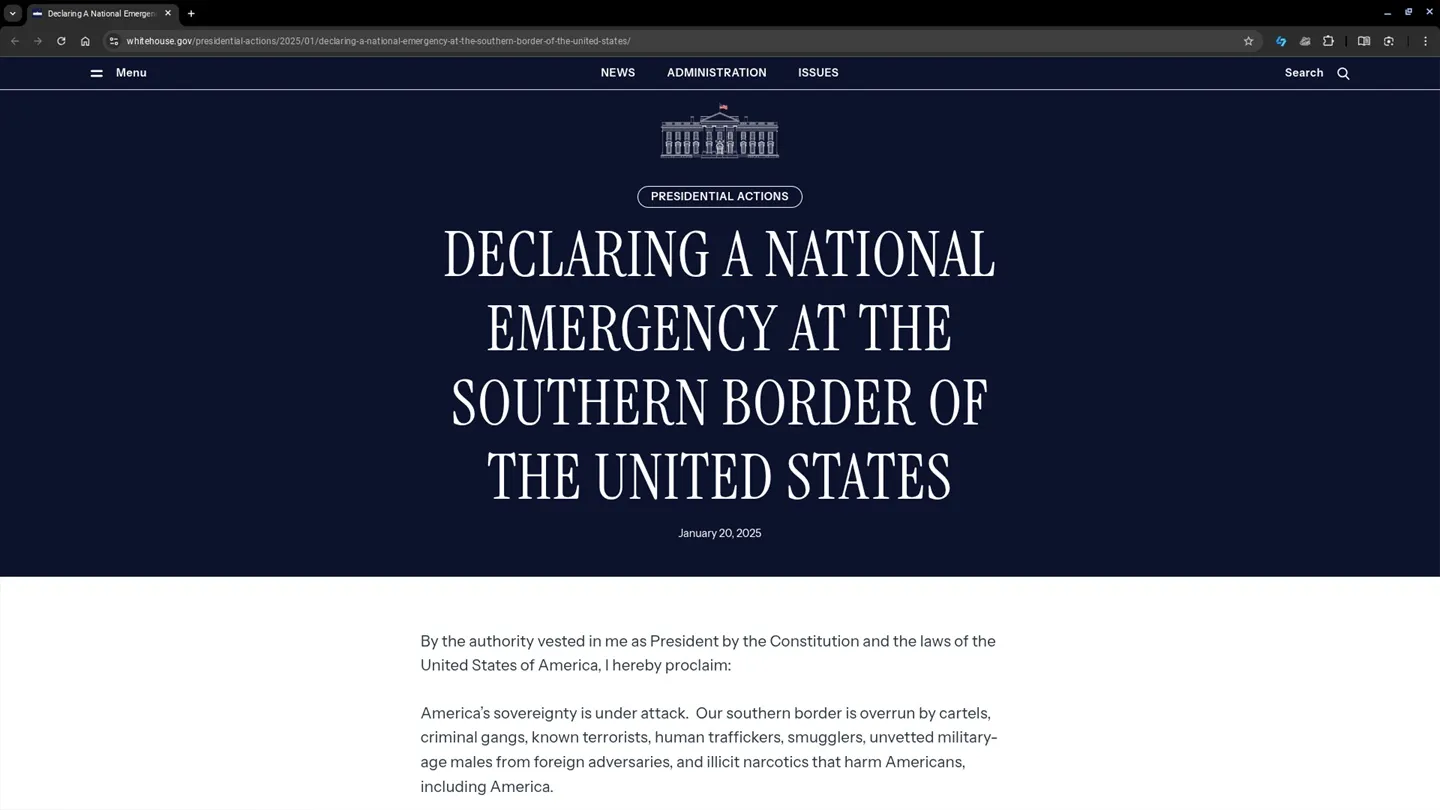
PROTECTING THE UNITED STATES FROM FOREIGN TERRORISTS AND OTHER
NATIONAL SECURITY AND PUBLIC SAFETY THREATS
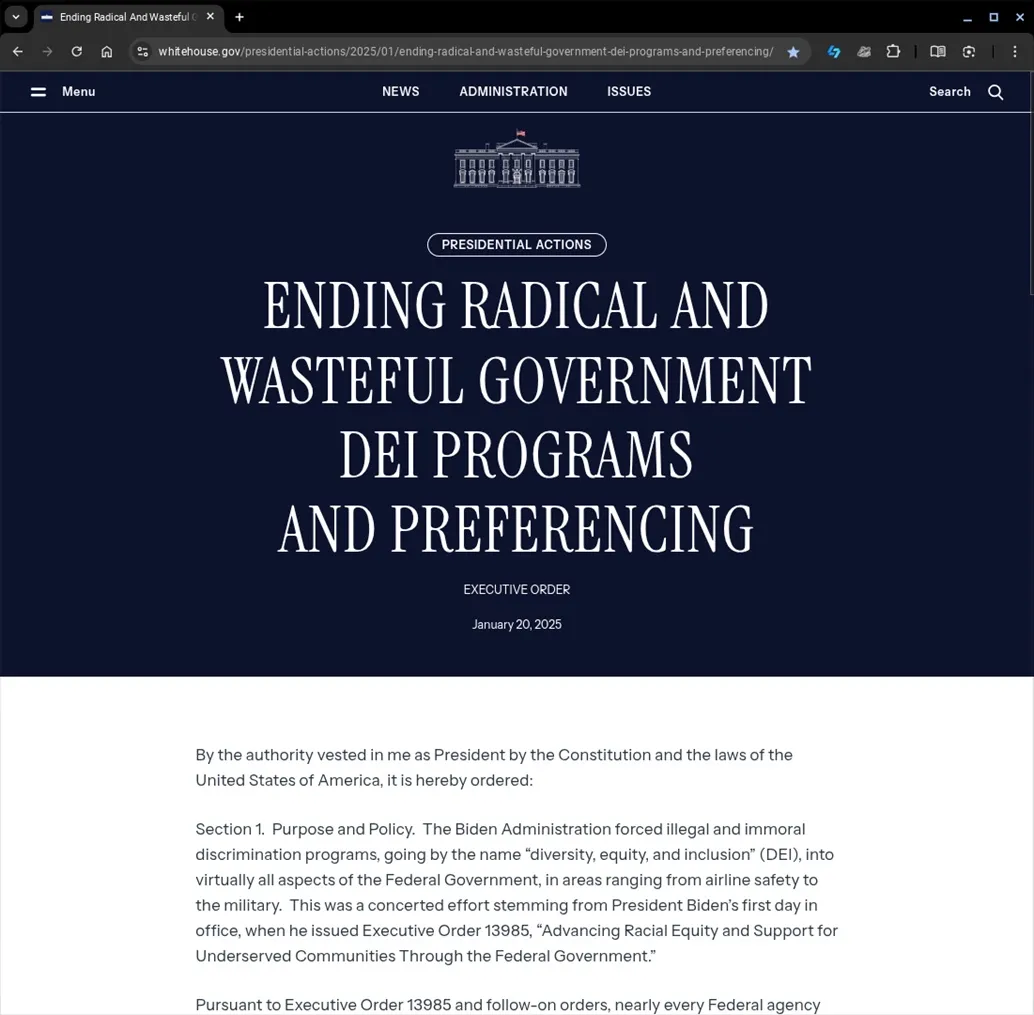
EXECUTIVE ORDER
January 20, 2025
PROTECTING THE UNITED STATES FROM FOREIGN TERRORISTS AND OTHER
NATIONAL SECURITY AND PUBLIC SAFETY THREATS
By the authority vested in me as President by the Constitution and the laws of the United States of America, including the Immigration and Nationality Act (INA), 8 U.S.C. 1101 et seq., and section 301 of title 3, United States Code, it is hereby ordered:
Section 1.  Policy and Purpose.  (a)  It is the policy of the United States to protect its citizens from aliens who intend to commit terrorist attacks, threaten our national security, espouse hateful ideology, or otherwise exploit the immigration laws for malevolent purposes.
(b)  To protect Americans, the United States must be vigilant during the visa-issuance process to ensure that those aliens approved for admission into the United States do not intend to harm Americans or our national interests.  More importantly, the United States must identify them before their admission or entry into the United States.  And the United States must ensure that admitted aliens and aliens otherwise already present in the United States do not bear hostile attitudes toward its citizens, culture, government, institutions, or founding principles, and do not advocate for, aid, or support designated foreign terrorists and other threats to our national security.
Sec. 2.  Enhanced Vetting and Screening Across Agencies.
(a)  The Secretary of State, in coordination with the Attorney General, the Secretary of Homeland Security, and the Director of National Intelligence, shall promptly:
(i)    identify all resources that may be used to ensure that all aliens seeking admission to the United States, or who are already in the United States, are vetted and screened to the maximum degree possible;
(ii)   determine the information needed from any country to adjudicate any visa, admission, or other benefit under the INA for one of its nationals, and to ascertain whether the individual seeking the benefit is who the individual claims to be and that the individual is not a security or public-safety threat;
(iii)  re-establish a uniform baseline for screening and vetting standards and procedures, consistent with the uniform baseline that existed on January 19, 2021, that will be used for any alien seeking a visa or immigration benefit of any kind; and
(iv)   vet and screen to the maximum degree possible all aliens who intend to be admitted, enter, or are already inside the United States, particularly those aliens coming from regions or nations with identified security risks.
(b)  Within 60 days of the date of this order, the Secretary of State, the Attorney General, the Secretary of Homeland Security, and the Director of National Intelligence shall jointly submit to the President, through the Assistant to the President for Homeland Security, a report:
(i)   identifying countries throughout the world for which vetting and screening information is so deficient as to warrant a partial or full suspension on the admission of nationals from those countries pursuant to section 212(f) of the INA (8 U.S.C. 1182(f)); and
(ii)  identifying how many nationals from those countries have entered or have been admitted into the United States on or since January 20, 2021, and any other information the Secretaries and Attorney General deem relevant to the actions or activities of such nationals since their admission or entry to the United States.
(c)  Whenever information is identified that would support the exclusion or removal of any alien described in subsection 2(b), the Secretary of Homeland Security shall take immediate steps to exclude or remove that alien unless she determines that doing so would inhibit a significant pending investigation or prosecution of the alien for a serious criminal offense or would be contrary to the national security interests of the United States.
Sec. 3.  Additional Measures to Protect the Nation.  As soon as possible, but no later than 30 days from the date of this order, the Secretary of State, in coordination with the Attorney General, the Secretary of Homeland Security, and the Director of National Intelligence, shall also:
(a)  Evaluate and adjust all existing regulations, policies, procedures, and provisions of the Foreign Service Manual, or guidance of any kind pertaining to each of the grounds of inadmissibility listed in sections 212(a)(2)-(3) of the INA (8 U.S.C. 1182(a)(2)-(3)), to ensure the continued safety and security of the American people and our constitutional republic;
(b)  Ensure that sufficient safeguards are in place to prevent any refugee or stateless individual from being admitted to the United States without undergoing stringent identification verification beyond that required of any other alien seeking admission or entry to the United States;
(c)  Evaluate all visa programs to ensure that they are not used by foreign nation-states or other hostile actors to harm the security, economic, political, cultural, or other national interests of the United States;
(d)  Recommend any actions necessary to protect the American people from the actions of foreign nationals who have undermined or seek to undermine the fundamental constitutional rights of the American people, including, but not limited to, our Citizens’ rights to freedom of speech and the free exercise of religion protected by the First Amendment, who preach or call for sectarian violence, the overthrow or replacement of the culture on which our constitutional Republic stands, or who provide aid, advocacy, or support for foreign terrorists;
(e)  Ensure the devotion of adequate resources to identify and take appropriate action for offenses described in 8 U.S.C. 1451;
(f)  Evaluate the adequacy of programs designed to ensure the proper assimilation of lawful immigrants into the United States, and recommend any additional measures to be taken that promote a unified American identity and attachment to the Constitution, laws, and founding principles of the United States; and
(g)  Recommend any additional actions to protect the American people and our constitutional republic from foreign threats.
Sec. 4.  General Provisions.  (a)  Nothing in this order shall be construed to impair or otherwise affect:
(i)   the authority granted by law to an executive department or agency, or the head thereof; or
(ii)  the functions of the Director of the Office of Management and Budget relating to budgetary, administrative, or legislative proposals.
(b)  This order shall be implemented consistent with applicable law and subject to the availability of appropriations.
(c)  This order is not intended to, and does not, create any right or benefit, substantive or procedural, enforceable at law or in equity by any party against the United States, its departments, agencies, or entities, its officers, employees, or agents, or any other person.
THE WHITE HOUSE
1600 Pennsylvania Ave NW
Washington, DC 20500
That on the first day of January, in the year of our Lord, one thousand eight hundred and sixty-three, all persons held as slaves within any State or designated part of a State, the people whereof shall then be in rebellion against the United States, shall be then, thenceforward, and forever free
University of Wisconsin-Madison have been targeted by sex traffickers who use social media to lure them into fake modeling opportunities.
- [Los Gomelos restaurant]: A Mexican restaurant in Madison that was shut down in 2019 after federal agents raided it for allegedly being involved in a drug and human trafficking ring.
- [Garibaldi Restaurant]: A Mexican restaurant in Madison that was also raided in 2019 for the same reason as Los Gomelos.
- [Blue Campaign] (dhs.gov/bluecampaign): A national public awareness campaign by the Department of Homeland Security that educates the public on how to recognize and report human trafficking.
The campaign has partnered with the [Edgewater Hotel]
and the [Graduate Hotel] in Madison
to train their staff
and display awareness materials.
:[ Not Trained :[
- [#stopsextortion]: A hashtag campaign by the FBI that warns teens about the dangers of online sexual exploitation and blackmail.
- [UW SAFEwalk]: A free service that provides walking escorts to students, faculty, staff, and visitors on the UW-Madison campus at night.
Los traficantes sexuales de la Universidad de Wisconsin-Madison han sido blanco de las redes sociales para atraerlos a oportunidades falsas de modelaje.
- [Restaurante Los Gomelos]: Un restaurante mexicano en Madison que fue cerrado en 2019 después de que agentes federales lo allanaran por estar presuntamente involucrado en una red de tráfico de drogas y personas.
- [Restaurante Garibaldi]: Un restaurante mexicano en Madison que también fue allanado en 2019 por la misma razón que Los Gomelos.
- [Campaña Azul] (dhs.gov/bluecampaign): Una campaña nacional de concienciación pública del Departamento de Seguridad Nacional que educa al público sobre cómo reconocer y denunciar la trata de personas.
La campaña se ha asociado con el [Hotel Edgewater]
y el [Hotel Graduate] en Madison
para capacitar a su personal
y mostrar materiales de concienciación.  :[ No capacitado :[
- [#stopsextortion]: Una campaña de hashtag del FBI que advierte a los adolescentes sobre los peligros de la explotación sexual y el chantaje en línea.
- [UW SAFEwalk]: Un servicio gratuito que ofrece escoltas a pie a estudiantes, profesores, personal y visitantes en el campus de la Universidad de Wisconsin-Madison por la noche.
ASU transfer students to UW Madison may be tempted to engage in sextortion for various reasons, such as:
- Seeking revenge, power, or control over their former or current partners
- Facing financial difficulties or debt
- Struggling with mental health issues or substance abuse
- Being influenced by peer pressure or criminal networks
However, sextortion is not only immoral and unethical, but also illegal and punishable by law.
Depending on the state and the severity of the crime, sextortion can result in fines, imprisonment, or sex offender registration².
Sextortion can also have negative consequences for the perpetrators, such as:
- Damaging their reputation and relationships
- Losing their academic or career opportunities
- Exposing themselves to blackmail or extortion by others
- Feeling guilt, shame, or remorse
To prevent ASU transfer students to UW Madison from sextorting UW students, the following steps can be taken¹²:
- **Educate yourself and others about sextortion**. Learn about the definition, prevalence, and impact of sextortion, and how to recognize and report it.
You can visit the website of the Office of Sex Trafficking Intervention Research (STIR) at the School of Social Work at ASU⁶,
which provides research, training, and resources on sex trafficking prevention and intervention.
You can also take their online course on Sex Trafficking 101⁷, which covers topics such as sextortion, online safety, victim identification, and trauma-informed care.
- **Respect yourself and others**. Do not treat yourself or others as objects or commodities.
Do not use sex as a weapon or a currency. Do not exploit or manipulate others for your own gain or pleasure.
Do not violate the consent, privacy, or dignity of others.
Do not share or solicit any personal, financial, or sexual information or images that you do not want others to see or use against you or others.
- **Seek help if you need it**. If you are struggling with any personal, academic, or financial issues, do not resort to sextortion as a solution.
There are many resources and services available to help you cope and overcome your challenges. You can contact the ASU Counseling Services
at 480-965-6146⁸ or the UW-Madison University Health Services at 608-265-5600 for confidential and professional support.
You can also reach out to your friends, family, mentors, or advisors for guidance and assistance.
Sextortion is a serious crime that harms both the victims and the perpetrators.
Please do not engage in or condone sextortion in any way.
You have the power and the responsibility to make ethical and respectful choices. 💙
Los estudiantes transferidos de ASU a UW Madison pueden verse tentados a participar en la sextorsión por diversas razones, como:
- Buscar venganza, poder o control sobre sus parejas anteriores o actuales
- Enfrentar dificultades financieras o deudas
- Luchar con problemas de salud mental o abuso de sustancias
- Estar influenciado por la presión de los compañeros o redes criminales
Sin embargo, la sextorsión no solo es inmoral y poco ética, sino también ilegal y punible por ley.
Dependiendo del estado y la gravedad del delito, la sextorsión puede resultar en multas, prisión o registro de delincuentes sexuales².
 La sextorsión también puede tener consecuencias negativas para los perpetradores, como:
- Dañar su reputación y sus relaciones
- Perder sus oportunidades académicas o profesionales
- Exponerse al chantaje o la extorsión por parte de otros
- Sentir culpa, vergüenza o remordimiento
Para evitar que los estudiantes transferidos de ASU a UW Madison cometan actos de sextorsión contra estudiantes de UW, se pueden tomar las siguientes medidas¹²:
- **Infórmese y eduque a los demás sobre la sextorsión**. Infórmese sobre la definición, la prevalencia y el impacto de la sextorsión, y cómo reconocerla y denunciarla.
Puede visitar el sitio web de la Oficina de Investigación de Intervención contra el Tráfico Sexual (Office of Sex Trafficking Intervention Research, STIR) en la Escuela de Trabajo Social de ASU⁶,
que ofrece investigación, capacitación y recursos sobre prevención e intervención en casos de tráfico sexual.
También puede tomar su curso en línea sobre Tráfico Sexual 101⁷, que cubre temas como sextorsión, seguridad en línea, identificación de víctimas y atención informada sobre el trauma.
 - **Respétate a ti mismo y a los demás**. No te trates a ti mismo ni a los demás como objetos o mercancías.
No uses el sexo como arma o moneda. No explotes ni manipules a los demás para tu propio beneficio o placer.
No violes el consentimiento, la privacidad o la dignidad de los demás.
No compartas ni solicites ninguna información o imagen personal, financiera o sexual que no quieras que otros vean o utilicen en tu contra o en contra de los demás.
- **Busca ayuda si la necesitas**. Si tienes problemas personales, académicos o financieros, no recurras a la sextorsión como solución.
Hay muchos recursos y servicios disponibles para ayudarte a afrontar y superar tus desafíos. Puedes comunicarte con los Servicios de Asesoramiento de ASU
al 480-965-6146⁸ o con los Servicios de Salud de la Universidad UW-Madison al 608-265-5600 para recibir apoyo confidencial y profesional.
También puedes comunicarte con tus amigos, familiares, mentores o asesores para obtener orientación y asistencia.
 La sextorsión es un delito grave que perjudica tanto a las víctimas como a los perpetradores.
No participes ni apruebes la sextorsión de ninguna manera.
Tienes el poder y la responsabilidad de tomar decisiones éticas y respetuosas. 💙
no mas - fondos federales
Una violación de la Ley Clery ocurre cuando una universidad o colegio no cumple con la Ley Clery.
La Ley Clery requiere que las escuelas denuncien ciertos delitos e incidentes, y que proporcionen advertencias y notificaciones de emergencia oportunas.  [1, 2, 3]
Ejemplos de infracciones de la Ley Clery [1, 4]
No informar las estadísticas de delitos
No emitir advertencias oportunas
No informar datos precisos sobre delitos
No tener un coordinador designado de la Ley Clery
No capacitar adecuadamente a las autoridades de seguridad del campus
Tergiversar sustancialmente el número, la ubicación o la naturaleza de los delitos
Sanciones por infracciones de la Ley Clery [1, 4]
El Departamento de Educación puede emitir multas civiles de hasta $69,733 por infracción
Se puede exigir a las instituciones que devuelvan fondos federales
Ejemplos de delitos denunciables de la Ley Clery [1, 3, 5]
Arrestos y derivaciones disciplinarias
Infracciones de la ley de drogas
Infracciones de la ley de bebidas alcohólicas
Infracciones de armas
Crímenes de odio
Asesinato y homicidio no negligente
Agresión agravada
Incendio provocado
Robo
Atraco
AI T Visa Framework
Goal: To leverage AI technology to enhance the identification and support of T Visa candidates while upholding ethical principles and protecting the rights of victims of human trafficking.
Key Components:
Data Collection & Analysis:
Sources:
News articles, academic research, NGO reports
Social media data (with strict privacy considerations)
Financial transaction data (with appropriate safeguards)
Victim testimonies, law enforcement records
Methods:
Pattern Recognition: Identify geographic hotspots, trafficking networks, and vulnerable populations.
Natural Language Processing (NLP): Analyze text data for keywords, phrases, emotional cues, and inconsistencies in victim narratives.
Machine Learning: Develop predictive models to assess risk factors and prioritize cases.
Screening & Prioritization:
Pre-screening Applications: Automate initial screening of T Visa applications for completeness and accuracy.
Prioritization Algorithms: Rank cases based on factors like severity of trafficking, victim vulnerability, and strength of evidence.
Case Management & Support:
Personalized Support: Recommend relevant resources and services based on individual needs.
Predictive Modeling: Forecast the likelihood of successful T Visa applications for efficient resource allocation.
Data-Driven Insights: Generate reports and visualizations to inform policy decisions and resource allocation strategies.
Ethical Considerations:
Data Privacy & Security:
Implement robust data security measures to protect sensitive information.
Obtain appropriate consent for data collection and use.
Comply with all relevant privacy regulations (e.g., GDPR, CCPA).
Bias Mitigation:
Regularly assess and mitigate potential biases in data and algorithms.
Ensure fair and equitable treatment of all individuals.
Human Oversight:
Maintain human oversight in all decision-making processes.
Use AI as a tool to assist human decision-makers, not replace them.
Transparency & Accountability:
Be transparent about how AI is being used in the T Visa process.
Establish clear accountability mechanisms for any decisions made based on AI-powered analysis.
Implementation & Monitoring:
Pilot Programs: Conduct pilot programs to test and refine AI-powered solutions.
Continuous Evaluation: Regularly evaluate the effectiveness and impact of AI tools.
Collaboration & Partnerships: Foster collaboration between law enforcement, NGOs, technology companies, and academic institutions.
Technology Considerations:
Cloud Computing: Utilize cloud-based platforms for data storage, processing, and analysis.
Explainable AI: Develop AI models that can explain their reasoning to enhance transparency and trust.
Disclaimer: This framework provides a high-level overview. Specific implementation details will vary depending on the context and resources available.
By adhering to this framework and continuously evaluating and refining its implementation,
organizations can leverage AI to improve the identification and support of T Visa candidates while upholding ethical principles and protecting the rights of victims of human trafficking.
This framework can be shared with stakeholders, including government agencies, NGOs, and technology companies,
to foster collaboration and facilitate the development and implementation of AI-powered solutions to combat human trafficking.
Marco de trabajo de la visa T basado en inteligencia artificial
Objetivo: aprovechar la tecnología de inteligencia artificial para mejorar la identificación y el apoyo a los candidatos a la visa T, respetando los principios éticos y protegiendo los derechos de las víctimas de la trata de personas.
Componentes clave:
Recopilación y análisis de datos:
Fuentes:
Artículos de noticias, investigación académica, informes de ONG
Datos de redes sociales (con estrictas consideraciones de privacidad)
Datos de transacciones financieras (con las salvaguardas adecuadas)
Testimonios de víctimas, registros de las fuerzas del orden
Métodos:
Reconocimiento de patrones: identificar puntos geográficos críticos, redes de trata y poblaciones vulnerables.
Procesamiento del lenguaje natural (PLN): analizar datos de texto en busca de palabras clave, frases, señales emocionales e inconsistencias en las narrativas de las víctimas.
Aprendizaje automático: desarrollar modelos predictivos para evaluar los factores de riesgo y priorizar los casos.
Selección y priorización:
Aplicaciones de preselección: automatizar la selección inicial de las solicitudes de visa T para comprobar su integridad y precisión.
Algoritmos de priorización: clasificar los casos en función de factores como la gravedad de la trata, la vulnerabilidad de la víctima y la solidez de la evidencia.
 Gestión y asistencia de casos:
Asistencia personalizada: recomendar recursos y servicios relevantes en función de las necesidades individuales.
Modelado predictivo: predecir la probabilidad de éxito de las solicitudes de visa T para una asignación eficiente de los recursos.
Información basada en datos: generar informes y visualizaciones para fundamentar las decisiones políticas y las estrategias de asignación de recursos.
Consideraciones éticas:
Privacidad y seguridad de los datos:
Implementar medidas de seguridad de datos sólidas para proteger la información confidencial.
Obtener el consentimiento adecuado para la recopilación y el uso de datos.
Cumplir con todas las normas de privacidad pertinentes (p. ej., GDPR, CCPA).
Mitigación de sesgos:
Evaluar y mitigar periódicamente los posibles sesgos en los datos y algoritmos.
Garantizar un tratamiento justo y equitativo de todas las personas.
Supervisión humana:
Mantener la supervisión humana en todos los procesos de toma de decisiones.
Utilizar la IA como herramienta para ayudar a los responsables de la toma de decisiones, no para reemplazarlos.
Transparencia y rendición de cuentas:
Sea transparente sobre cómo se utiliza la IA en el proceso de la visa T.
Establecer mecanismos de rendición de cuentas claros para cualquier decisión tomada en función del análisis impulsado por la IA.
 Implementación y monitoreo:
Programas piloto: Realizar programas piloto para probar y refinar soluciones impulsadas por IA.
Evaluación continua: Evaluar regularmente la efectividad y el impacto de las herramientas de IA.
Colaboración y asociaciones: Fomentar la colaboración entre las fuerzas de seguridad, las ONG, las empresas de tecnología y las instituciones académicas.
Consideraciones tecnológicas:
Computación en la nube: Utilizar plataformas basadas en la nube para el almacenamiento, procesamiento y análisis de datos.
IA explicable: Desarrollar modelos de IA que puedan explicar su razonamiento para mejorar la transparencia y la confianza.
Descargo de responsabilidad: Este marco proporciona una descripción general de alto nivel. Los detalles específicos de la implementación variarán según el contexto y los recursos disponibles.
Al adherirse a este marco y evaluar y refinar continuamente su implementación,
las organizaciones pueden aprovechar la IA para mejorar la identificación y el apoyo a los candidatos a la visa T, al mismo tiempo que defienden los principios éticos y protegen los derechos de las víctimas de la trata de personas.
Este marco se puede compartir con las partes interesadas, incluidas las agencias gubernamentales, las ONG y las empresas de tecnología,
para fomentar la colaboración y facilitar el desarrollo y la implementación de soluciones impulsadas por IA para combatir la trata de personas.
Economics 101: Supply and Demand:
Prioritizing US Citizens' Needs and ensuring their tax dollars benefit the country and its citizens.
1. National sovereignty: Prioritizing US citizens' interests and well-being.
2. Taxpayer accountability: Ensuring tax dollars are allocated efficiently and effectively.
3. Economic growth: Fostering a strong economy that benefits US citizens.
Economics 101: Supply and Demand
By prioritizing US citizens' needs, the government can influence supply and demand dynamics, leading to:
- Reduced labor market competition: Lessening the burden on US workers and potentially increasing wages.
- Increased demand for US goods and services: Fostering economic growth and job creation.
- Better allocation of resources: Ensuring tax dollars fund essential public services and support US businesses.
Potential Solutions
1. Immigration reform: Implementing policies that balance national security, economic needs, and humanitarian concerns.
2. Tax reform: Streamlining tax codes, reducing waste, and ensuring tax dollars fund essential public services.
3. Economic development: Investing in infrastructure, education, and innovation to drive economic growth.
By applying Economics 101 principles, we can create a more robust economy that benefits US citizens.
76,487 views  Jan 14, 2025
News.com.au Deputy Editor Liz Burke slams the Los Angeles Fire Department’s diversity chief after a viral video received backlash when she defended DEI hiring by blaming victims.
“There are some quotes from that clip that look pretty bad no matter what the context, this week especially,” Ms Burke said.
“This clip was made promoting the department’s DEI push, they’re trying to overcome some criticism.
“There’s no real good way to spin those lines coming out now.”
Sodoma y Gomorra son dos ciudades de la Biblia que fueron destruidas por Dios debido a su maldad: [1, 2]
Historia
En el libro de Génesis, Dios le dice a Abraham que destruirá Sodoma y Gomorra, y Abraham pide la vida de todas las personas justas que viven allí.
Dios acepta perdonar las ciudades si puede encontrar 50 personas justas, pero no encuentra ninguna.
Las ciudades son destruidas por piedras que caen del cielo. [1, 3]
Ubicación
Es probable que las ciudades estuvieran ubicadas en el Valle de Sidim, que ahora es el área del Mar Muerto en Israel.
El sitio industrial actual de Sedom, Israel, está cerca del presunto sitio de las ciudades. [4]
Significado
La historia de Sodoma y Gomorra es una advertencia de que el deseo de riqueza y seguridad puede apoderarse de nosotros si no tenemos cuidado.
También muestra la justa ira de Dios hacia la arrogancia y la violencia,
y su hospitalidad hacia nosotros a pesar de nuestra debilidad y fracaso. [3, 5]
Referencias
Sodoma y Gomorra se mencionan en todo el Antiguo y el Nuevo Testamento [1]
Otras obras
También hay una película de 1962 llamada Sodoma y Gomorra dirigida por Robert Aldrich y Sergio Leone.  [6]
  metepz - Metepec Cartel, "Cártel de Metepec," is a regional organized restaurant group operating in Mexico.
  - They have been linked to various activities, including restaurants, extortion, kidnapping, and trafficking w/o license plates
  The diversity of metepz enterprise portfolio include:
1. Restaurants
2. Cybercrime (e.g., phishing, ransomware, identity theft)
3. Human trafficking (e.g., sex trafficking, labor trafficking)
4. Money laundering
5. Terrorism financing
6. Fraud (e.g., credit card fraud, healthcare fraud)
7. Extortion
8. Bribery
9. Counterfeiting
10. Environmental crimes (e.g., wildlife trafficking, pollution)
metepz enterprises often diversify their portfolios to:
1. Reduce risk
2. Increase profits
3. Evade tax
4. Expand their influence and power and slaves
Agencies and financial institutions use various strategies to detect and disrupt metepz enterprises, including:
1. Gathering
2. Financial analysis
3. Cyber forensics
4. International cooperation
5. Asset forfeiture
metepz - Cártel de Metepec, es un grupo regional organizado de restaurantes que opera en México.
 - Se les ha vinculado a diversas actividades, incluidos restaurantes, extorsión, secuestro y tráfico sin matrículas
La diversidad de la cartera empresarial de metepz incluye:
1. Restaurantes
2. Delitos cibernéticos (p. ej., phishing, ransomware, robo de identidad)
3. Tráfico de personas (p. ej., tráfico sexual, tráfico laboral)
4. Blanqueo de dinero
5. Financiamiento del terrorismo
6. Fraude (p. ej., fraude con tarjetas de crédito, fraude sanitario)
7. Extorsión
8. Soborno
9. Falsificación
10. Delitos medioambientales (p. ej., tráfico de fauna silvestre, contaminación)
Las empresas de metepz suelen diversificar sus carteras para:
1. Reducir el riesgo
2. Aumentar las ganancias
3. Evadir impuestos
4. Ampliar su influencia y poder y esclavizar
Las agencias e instituciones financieras utilizan diversas estrategias para detectar y desmantelar las empresas de metepz, entre ellas:
1.  Reunión
2. Análisis financiero
3. Ciberinformática
4. Cooperación internacional
5. Decomiso de activos
One of the criminal groups that practice sextortion in Wisconsin is the **Fresno Bulldogs**,
a street gang that originated from the Nuestra Familia prison gang.
The Fresno Bulldogs have been involved in various crimes, such as drug trafficking, robbery, murder, and extortion³.
The gang allegedly uses social media platforms, such as Facebook and Instagram,
to lure and blackmail young women, especially Latinas, into sending them nude photos or videos.
The gang then threatens to publish or distribute the images to the women's families, friends, or employers
unless they pay a ransom or agree to work for them as drug mules, prostitutes, or assassins.
Some of the victims of sextortion in Wisconsin have decided to fight back against the gang and its threats.
In 2021, a 25-year-old man from Chicago was charged with sextorting a 16-year-old girl from Wisconsin, who was Latina.
He met her on a dating app and convinced her to send him nude photos and videos.
He then blackmailed her for money and sex, threatening to post her images online or kill her family⁴.
Sextortion is a serious crime that can have devastating effects on the victims’ mental health, self-esteem, and safety.
The FBI and other law enforcement agencies have been trying to address this issue by raising awareness,
providing support, and prosecuting the perpetrators.
However, the challenges of combating sextortion remain, such as the lack of reporting,
the difficulty of tracing the online activity, and the complexity of the legal framework.
Uno de los grupos criminales que practican la sextorsión en Wisconsin son los **Fresno Bulldogs**,
una pandilla callejera que se originó a partir de la pandilla de la prisión Nuestra Familia.
Los Fresno Bulldogs han estado involucrados en varios delitos, como tráfico de drogas, robo, asesinato y extorsión³.
La pandilla supuestamente utiliza plataformas de redes sociales, como Facebook e Instagram,
para atraer y chantajear a mujeres jóvenes, especialmente latinas, para que les envíen fotos o videos desnudos.
Luego, la pandilla amenaza con publicar o distribuir las imágenes a las familias, amigos o empleadores de las mujeres
a menos que paguen un rescate o acepten trabajar para ellas como mulas de drogas, prostitutas o asesinas.
Algunas de las víctimas de sextorsión en Wisconsin han decidido luchar contra la pandilla y sus amenazas.
En 2021, un hombre de 25 años de Chicago fue acusado de sextorsión a una niña de 16 años de Wisconsin, que era latina.  La conoció en una aplicación de citas y la convenció de que le enviara fotos y videos desnudos.
Luego la chantajeó para que le diera dinero y sexo, amenazándola con publicar sus imágenes en línea o matar a su familia⁴.
La sextorsión es un delito grave que puede tener efectos devastadores en la salud mental, la autoestima y la seguridad de las víctimas.
El FBI y otras agencias de aplicación de la ley han estado tratando de abordar este problema creando conciencia,
brindando apoyo y procesando a los perpetradores.
Sin embargo, los desafíos de combatir la sextorsión siguen siendo, como la falta de denuncia,
la dificultad de rastrear la actividad en línea y la complejidad del marco legal.
One of the criminal groups that practice sextortion in Mexico is the **Juárez Cartel**,
also known as the Vicente Carrillo Fuentes Organization, a Mexican drug cartel based in Ciudad Juárez, Chihuahua³.
The Juárez Cartel allegedly uses social media platforms, such as Facebook and WhatsApp,
to lure and blackmail women, especially young and vulnerable ones, into sending them nude photos or videos².
The cartel then threatens to publish or distribute the images to the women’s families, friends, or employers
unless they pay a ransom or agree to work for them as drug mules, prostitutes, or assassins².
Some of the victims of sextortion in Mexico have decided to fight back against the cartel and its threats.
In Delicias, a city in the southern part of Chihuahua,
a group of women formed a self-defense organization called **Las Delicias**, which means “The Delights” in Spanish.
Las Delicias is composed of women who have been extorted, abused, or kidnapped by the Juárez Cartel,
and who have managed to escape or resist their demands.
The group’s mission is to expose the cartel’s activities,
protect other women from falling prey to them, and seek justice for their crimes.
Las Delicias operates through a network of informants, hackers, and activists,
who gather and share information about the cartel’s members, locations, and operations.
They also use social media to warn other women about the dangers of sextortion
and to offer support and advice to those who have been victimized.
The group has also collaborated with other self-defense groups in the region, such as the **Autodefensas de Chihuahua**,
which is composed of farmers and ranchers who have taken up arms against the cartel’s extortion and violence.
The actions of Las Delicias and other self-defense groups have not gone unnoticed by the cartel,
which has retaliated with more threats, attacks, and kidnappings.
The group has also faced challenges from the authorities,
who have accused them of being vigilantes, criminals, or even collaborators of rival cartels.
The group has denied these allegations and has demanded that the government take more action to stop the cartel and protect the citizens .
Uno de los grupos criminales que practican la sextorsión en México es el **Cártel de Juárez**,
también conocido como la Organización Vicente Carrillo Fuentes, un cártel de drogas mexicano con sede en Ciudad Juárez, Chihuahua³.
El Cártel de Juárez supuestamente utiliza plataformas de redes sociales, como Facebook y WhatsApp,
para atraer y chantajear a mujeres, especialmente a las jóvenes y vulnerables, para que les envíen fotos o videos desnudos².
El cártel luego amenaza con publicar o distribuir las imágenes a las familias, amigos o empleadores de las mujeres
a menos que paguen un rescate o acepten trabajar para ellos como mulas de drogas, prostitutas o asesinas².
Algunas de las víctimas de la sextorsión en México han decidido luchar contra el cártel y sus amenazas.
En Delicias, una ciudad en la parte sur de Chihuahua,
un grupo de mujeres formó una organización de autodefensa llamada **Las Delicias**, que significa "Las Delicias" en español.  Las Delicias está conformada por mujeres que han sido extorsionadas, abusadas o secuestradas por el Cártel de Juárez,
y que han logrado escapar o resistirse a sus demandas.
La misión del grupo es exponer las actividades del cártel,
proteger a otras mujeres para que no caigan presas de ellas y buscar justicia por sus crímenes.
Las Delicias opera a través de una red de informantes, hackers y activistas,
que recopilan y comparten información sobre los miembros, ubicaciones y operaciones del cártel.
También utilizan las redes sociales para advertir a otras mujeres sobre los peligros de la sextorsión
y para ofrecer apoyo y asesoramiento a quienes han sido víctimas.
El grupo también ha colaborado con otros grupos de autodefensa en la región, como las **Autodefensas de Chihuahua**,
que está conformada por agricultores y ganaderos que han tomado las armas contra la extorsión y la violencia del cártel.
 Las acciones de Las Delicias y otros grupos de autodefensa no han pasado desapercibidas para el cártel,
que ha respondido con más amenazas, ataques y secuestros.
El grupo también ha enfrentado cuestionamientos de las autoridades,
que los han acusado de ser vigilantes, criminales o incluso colaboradores de cárteles rivales.
El grupo ha negado estas acusaciones y ha exigido que el gobierno tome más medidas para detener al cártel y proteger a los ciudadanos.
A woman from Madison, Wisconsin, who fought back against a sextortionist who recorded her on Skype and blackmailed her for years.
Her name is **Madison Conradis**, and she is a former Miss Wisconsin USA contestant and a TV host³.
Conradis hired a professional photographer in 2011 to take some photos for her modeling portfolio.
Some of the photos were proofs that were not chosen because they were too revealing.
The photographer uploaded them to a password-protected online gallery,
but someone hacked the gallery and stole the photos³.
In 2014, Conradis received a message on Facebook from a stranger who claimed to have her photos
and threatened to expose them to her family, friends, and employer unless she paid him $1,000.
Conradis ignored the message, thinking it was a scam,
but the blackmailer persisted and sent her more messages with screenshots of her photos and personal information³.
Conradis reported the blackmailer to the police,
but they told her there was nothing they could do and that she should just pay him.
Conradis refused to pay, and the blackmailer escalated his threats.
He asked her to perform sexual acts on Skype, and recorded her without her consent.
He then used the videos to blackmail her for more money and sex, threatening to post them online or kill her family³.
Conradis decided to take matters into her own hands and started to investigate the blackmailer's identity.
She used various online tools and techniques to trace his IP address, email, phone number, and social media accounts.
She discovered that he was a 25-year-old man from Chicago
named **Anthony Zampino**, who had a criminal record and a history of sextorting other women³.
Conradis contacted the FBI and provided them with the evidence she collected.
The FBI launched an investigation and arrested Zampino in 2021.
He was charged with cyberstalking, extortion, and child pornography, and faced up to 30 years in prison³.
Conradis's story is an example of how sextortion victims can fight back against their perpetrators and seek justice.
However, not all victims have the resources, skills, or courage to do what Conradis did.
Sextortion is a serious crime that can have devastating effects on the victims' mental health, self-esteem, and safety.
The FBI and other law enforcement agencies have been trying to address this issue by raising awareness,
providing support, and prosecuting the perpetrators.
However, the challenges of combating sextortion remain, such as the lack of reporting,
the difficulty of tracing the online activity, and the complexity of the legal framework.
Una mujer de Madison, Wisconsin, que luchó contra un sextorsionista que la grabó en Skype y la chantajeó durante años.
Su nombre es **Madison Conradis**, y es una ex concursante de Miss Wisconsin USA y presentadora de televisión³.
Conradis contrató a un fotógrafo profesional en 2011 para que tomara algunas fotos para su portafolio de modelaje.
Algunas de las fotos eran pruebas que no fueron elegidas porque eran demasiado reveladoras.
El fotógrafo las subió a una galería en línea protegida con contraseña,
pero alguien hackeó la galería y robó las fotos³.
En 2014, Conradis recibió un mensaje en Facebook de un extraño que decía tener sus fotos
y amenazaba con exponerlas a su familia, amigos y empleador a menos que le pagara $1,000.
Conradis ignoró el mensaje, pensando que era una estafa,
pero el chantajista insistió y le envió más mensajes con capturas de pantalla de sus fotos e información personal³.
 Conradis denunció al chantajista a la policía,
pero le dijeron que no podían hacer nada y que simplemente debía pagarle.
Conradis se negó a pagar y el chantajista aumentó sus amenazas.
Le pidió que realizara actos sexuales por Skype y la grabó sin su consentimiento.
Luego usó los videos para chantajearla para obtener más dinero y sexo, amenazándola con publicarlos en línea o matar a su familia³.
Conradis decidió tomar el asunto en sus propias manos y comenzó a investigar la identidad del chantajista.
Usó varias herramientas y técnicas en línea para rastrear su dirección IP, correo electrónico, número de teléfono y cuentas de redes sociales.
Descubrió que era un hombre de 25 años de Chicago
llamado **Anthony Zampino**, que tenía antecedentes penales y un historial de sextorsionismo con otras mujeres³.
Conradis se puso en contacto con el FBI y les proporcionó la evidencia que recopiló.  El FBI inició una investigación y arrestó a Zampino en 2021.
Fue acusado de acoso cibernético, extorsión y pornografía infantil, y enfrentaba hasta 30 años de prisión³.
La historia de Conradis es un ejemplo de cómo las víctimas de sextorsión pueden luchar contra sus perpetradores y buscar justicia.
Sin embargo, no todas las víctimas tienen los recursos, las habilidades o el coraje para hacer lo que hizo Conradis.
La sextorsión es un delito grave que puede tener efectos devastadores en la salud mental, la autoestima y la seguridad de las víctimas.
El FBI y otras agencias de aplicación de la ley han estado tratando de abordar este problema creando conciencia,
brindando apoyo y procesando a los perpetradores.
Sin embargo, los desafíos de combatir la sextorsión siguen existiendo, como la falta de denuncia,
la dificultad de rastrear la actividad en línea y la complejidad del marco legal.
- Sextortion is a form of sexual exploitation that involves blackmailing someone with intimate images or videos,
or threatening to expose them online or to their contacts, unless they comply with the perpetrator’s demands¹.
- According to a 2019 report by the Mexican NGO Luchadoras, Mexico at least 10,000 women and girls are victims of sextortion in Mexico every year².
- Sextortion is a crime in Mexico, punishable by up to six years in prison, but it is rarely reported or prosecuted due to fear, shame, stigma, and lack of trust in the authorities²³.
Many victims do not know their rights or how to seek help, and some are even blamed or revictimized by the police or the judiciary²³.
- Some initiatives have been launched to fight sextortion and support the victims in Mexico, such as the campaign #NoTeCalles (Don’t Stay Silent),
which provides legal and psychological assistance, as well as a hotline and a chatbot to report cases and receive guidance⁴⁵.
Another example is the project #NoSoyTuPorno (I’m Not Your Porn), which aims to raise awareness and educate young people about the risks and consequences of sextortion .
- La sextorsión es una forma de explotación sexual que consiste en chantajear a alguien con imágenes o vídeos íntimos,
o amenazar con exponerlo en línea o a sus contactos, a menos que cumpla con las exigencias del agresor¹.
- Según un informe de 2019 de la ONG mexicana Luchadoras, al menos 10.000 mujeres y niñas son víctimas de sextorsión en México cada año².
- La sextorsión es un delito en México, punible con hasta seis años de prisión, pero rara vez se denuncia o se procesa debido al miedo, la vergüenza, el estigma y la falta de confianza en las autoridades²³.
Muchas víctimas no conocen sus derechos ni cómo buscar ayuda, y algunas incluso son culpadas o revictimizadas por la policía o el poder judicial²³.
 - Se han puesto en marcha algunas iniciativas para luchar contra la sextorsión y apoyar a las víctimas en México, como la campaña #NoTeCalles,
que ofrece asistencia jurídica y psicológica, así como una línea telefónica y un chatbot para denunciar casos y recibir orientación⁴⁵.
Otro ejemplo es el proyecto #NoSoyTuPorno, que pretende concienciar y educar a los jóvenes sobre los riesgos y las consecuencias de la sextorsión.
- Wisconsin is one of the states that has deployed police officers to the southern border in response to a request from the governors of Texas and Arizona,
who claim that the Biden administration has failed to secure the border and stop illegal immigration¹².
- Wisconsin law enforcement officers are expected to assist with drug interdiction investigations, vehicle maintenance, and highway patrol support in border states².
- Border security, migration governance, and sovereignty are complex and interrelated issues that involve multiple actors, policies, and legal frameworks at the national, regional, and international levels⁵.
- Wisconsin es uno de los estados que ha desplegado agentes de policía en la frontera sur en respuesta a una solicitud de los gobernadores de Texas y Arizona,
quienes afirman que la administración Biden no ha logrado asegurar la frontera ni detener la inmigración ilegal¹².
- Se espera que los agentes de policía de Wisconsin ayuden con las investigaciones de interdicción de drogas, el mantenimiento de vehículos y el apoyo a las patrullas de carreteras en los estados fronterizos².
- La seguridad fronteriza, la gobernanza de la migración y la soberanía son cuestiones complejas e interrelacionadas que involucran a múltiples actores, políticas y marcos legales a nivel nacional, regional e internacional⁵.
La Constitución de los Estados Unidos que establece que el gobierno federal debe proteger a cada estado contra invasiones es el **Artículo IV, Sección 4**¹²³⁴.
Algunos estados han invocado esta disposición para argumentar que el gobierno federal no está cumpliendo con su deber constitucional
de proteger la frontera sur de la inmigración ilegal y el tráfico de drogas²³.
DFW Anti-Terrorism/Contraband Enforcement Team:
Inbound cargo, Transshipments, EXODUS, Canine Detector Dogs. Intellectual Property Rights, Contraband, Currency, Narcotics, Trade Act, Radiation, Weapons of Mass Effect, and Security Enforcement.
Main Number: (972) 456-2320/9833; Supervisor: (972) 456-5654; K9 Supervisor: (972) 456-5654;  Chief: (972) 456- 5631;  FAX: (972) 973-9969; DFWA-TCET@cbp.dhs.gov Seven days per week
Field Office
Houston
Address:
- -
2323 S. Shepherd #1300
Houston, TX 77019
United States"
https://www.cbp.gov/about/contact/ports/dallasft-worth-texas-5501#:~:text=days%20per%20week-,Contact%20Information,%2D%0A2323%20S.%20Shepherd%20%231300%0AHouston%2C%20TX%2077019%0AUnited%20States,-Return%20to%20top
https://www.gregabbott.com/contact-us/
https://www.cbp.gov/newsroom/local-media-release/smuggling-attempts-disrupted-el-paso-sector-0
Equipo de lucha contra el terrorismo y el contrabando de DFW:
Carga entrante, transbordos, EXODUS, perros detectores caninos, derechos de propiedad intelectual, contrabando, moneda, estupefacientes, ley de comercio, radiación, armas de efecto masivo y aplicación de la seguridad.
Número principal: (972) 456-2320/9833; Supervisor: (972) 456-5654; Supervisor K9: (972) 456-5654; Jefe: (972) 456-5631; FAX: (972) 973-9969; DFWA-TCET@cbp.dhs.gov Los siete días de la semana
Oficina de campo
Houston
Dirección:
- -
2323 S. Shepherd #1300
Houston, TX 77019
Estados Unidos"
https://www.cbp.gov/about/contact/ports/dallasft-worth-texas-5501#:~:text=days%20per%20week-,Contact%20Information,%2D%0A2323%20S.%20Shepherd%20%231300%0AHouston%2C%20TX%2077019%0AUnited%20States,-Return%20to%20top
https://www.gregabbott.com/contact-us/
https://www.cbp.gov/newsroom/local-media-release/smuggling-attempts-disrupted-el-paso-sector-0
Human Trafficking Prevention Month Events
CCHT Corner
From the Field
What’s New With Blue
#BlueCampaign
#TacklingTrafficking Is a Collective Effort. Help Blue Campaign Throughout January and Beyond.
The U.S. Department of Homeland Security’s (DHS) Center for Countering Human Trafficking’s (CCHT) Blue Campaign would like to thank all who participated in #WearBlueDay.
You showed your support for victims and survivors of human trafficking, and in doing so, stated your commitment to help end the crime in the United States and abroad.
For the remainder of the month, the Campaign will be highlighting our latest resources on social media using the hashtag #TacklingTrafficking.
Follow us (@DHSBlueCampaign on X, Facebook, and Instagram) for free awareness tools that you can share online, with your friends and family, and in your workplace and community.
#TacklingTrafficking is a team effort, and Blue Campaign needs your help in combating this despicable crime.
Indicators of human trafficking: Learn what human trafficking looks like and how to report it.
Community toolkits: Learn how you can respond to potential human trafficking in your community or industry.
Awareness videos: Decipher between sex and labor trafficking, find out how young people can become targeted, and more.
Downloadable resources: Browse Blue Campaign’s comprehensive library of anti-human trafficking materials.
Human Trafficking Prevention Month Events
Registration Still Open for Spanish and Continued Presence Webinars
Blue Campaign invites you to attend its free webinar, “From Awareness to Action: Recognizing and Reporting Human Trafficking.”
Learn how to best recognize and report potential cases of human trafficking and hear from Blue Campaign leaders as they discuss what human trafficking is,
indicators of potential human trafficking, common misconceptions, how traffickers operate, and available resources. Registration for one WebEx session remains open:
Register for Session 2 (Spanish): Tuesday, January 16, 2025, 2 – 3 p.m. EST
Continued Presence Webinar for the Public
www.DHS.gov/CCHT
On January 16, 2025, at 3:30 pm, CCHT will host a webinar on Continued Presence (CP) for non-governmental organizations, service providers, and the public.
The webinar will focus on explaining CP and the victim-centered approach by referencing the Continued Presence Resource Guide and outlining the request process,
applicant eligibility and application requirements, and recent improvements to the program.
Registration for this webinar is open now and can be found at this link.
Continued Presence is a temporary immigration designation provided to individuals identified by law enforcement as trafficking victims who may be potential witnesses.
CP allows trafficking victims to lawfully remain in the U.S. temporarily and work during the investigation into the human trafficking-related crimes committed against them
and during civil action under 18 U.S.C. § 1595 by the victims against their traffickers.
We look forward to your attendance!
CCHT Corner
CCHT Releases Countering Human Trafficking Year in Review, Hosts DHS-wide and Public Training Events during HTPM
In recognition of Human Trafficking Prevention Month (HTPM), CCHT is coordinating three efforts in January aimed at educating DHS employees and the public on human trafficking and Continued Presence,
and highlighting Department-wide counter-trafficking efforts:
The annual Countering Human Trafficking: Year in Review will be released later this month.
The report highlights many of DHS’s efforts during the last fiscal year to enhance screening and identification of victims, improve protection and assistance to victims,
advance investigations and enforcement actions, and refine training, outreach, and engagement.
It also contains links to publicly available reports, resource guides, public awareness materials, program descriptions, press releases, and more.
Look for the report towards the end of this month on the CCHT landing page at dhs.gov.
The third annual DHS CCHT Virtual Human Trafficking Seminar will take place on January 17 and 18. The seminar is open to all DHS personnel,
with hundreds of DHS special agents, officers, program managers, analysts, victim assistance specialists, forensic interviewers, and others expected to attend.
The seminar will educate DHS employees on prevention, protection, prosecution, and partnership as they relate to countering human trafficking.
Eventos del Mes de Prevención de la Trata de Personas
El rincón del CCHT
Desde el campo
Novedades de Blue
#BlueCampaign
#TacklingTrafficking es un esfuerzo colectivo. Ayude a la campaña Blue durante enero y más allá.
La campaña Blue del Centro para Contrarrestar la Trata de Personas (CCHT) del Departamento de Seguridad Nacional de los Estados Unidos (DHS) desea agradecer a todos los que participaron en el #WearBlueDay.
Demostraron su apoyo a las víctimas y sobrevivientes de la trata de personas y, al hacerlo, manifestaron su compromiso de ayudar a poner fin al delito en los Estados Unidos y en el extranjero.
Durante el resto del mes, la campaña destacará nuestros últimos recursos en las redes sociales utilizando el hashtag #TacklingTrafficking.
Síganos (@DHSBlueCampaign en X, Facebook e Instagram) para obtener herramientas de concientización gratuitas que puede compartir en línea, con sus amigos y familiares, y en su lugar de trabajo y comunidad.
 #TacklingTrafficking es un esfuerzo de equipo, y Blue Campaign necesita su ayuda para combatir este crimen despreciable.
Indicadores de trata de personas: aprenda cómo se manifiesta la trata de personas y cómo denunciarla.
Kits de herramientas para la comunidad: aprenda cómo puede responder a la posible trata de personas en su comunidad o industria.
Videos de concientización: distinga la trata sexual de la trata laboral, descubra cómo los jóvenes pueden convertirse en el objetivo y más.
Recursos descargables: explore la biblioteca integral de materiales contra la trata de personas de Blue Campaign.
Eventos del Mes de Prevención de la Trata de Personas
La inscripción aún está abierta para los seminarios web en español y con presencia continua
Blue Campaign lo invita a asistir a su seminario web gratuito, “De la concientización a la acción: reconocer y denunciar la trata de personas”.
Aprenda cómo reconocer y denunciar mejor los posibles casos de trata de personas y escuche a los líderes de Blue Campaign mientras hablan sobre qué es la trata de personas,
los indicadores de posible trata de personas, los conceptos erróneos comunes, cómo operan los traficantes y los recursos disponibles.  La inscripción para una sesión de WebEx sigue abierta:
Inscríbase para la Sesión 2 (español): martes 16 de enero de 2025, de 2 a 3 p. m., hora del este de EE. UU.
Seminario web sobre presencia continua para el público
www.DHS.gov/CCHT
El 16 de enero de 2025, a las 3:30 p. m., CCHT organizará un seminario web sobre presencia continua (CP) para organizaciones no gubernamentales, proveedores de servicios y el público en general.
El seminario web se centrará en explicar la CP y el enfoque centrado en las víctimas haciendo referencia a la Guía de recursos de presencia continua y describiendo el proceso de solicitud,
los requisitos de elegibilidad y solicitud del solicitante, y las mejoras recientes del programa.
La inscripción para este seminario web ya está abierta y se puede encontrar en este enlace.
La presencia continua es una designación migratoria temporal que se brinda a las personas identificadas por las fuerzas del orden como víctimas de trata que pueden ser testigos potenciales.
La CP permite a las víctimas de trata permanecer legalmente en los EE. UU. temporalmente y trabajar durante la investigación de los delitos relacionados con la trata de personas cometidos contra ellas
y durante la acción civil en virtud del Título 18 del Código de los Estados Unidos, artículo 1595, por parte de las víctimas contra sus traficantes.
¡Esperamos contar con su asistencia!
El rincón de CCHT
CCHT publica un resumen anual de la lucha contra la trata de personas y organiza eventos de capacitación para todo el DHS y el público durante el HTPM
En reconocimiento del Mes de la Prevención de la Trata de Personas (HTPM),
CCHT está coordinando tres esfuerzos en enero destinados a educar a los empleados del DHS y al público sobre la trata de personas y la Presencia Continua,
y destacar los esfuerzos de lucha contra la trata de personas en todo el Departamento:
El informe anual Lucha contra la Trata de Personas: Resumen del Año se publicará a finales de este mes.
El informe destaca muchos de los esfuerzos del DHS durante el último año fiscal para mejorar la detección e identificación de las víctimas, mejorar la protección y la asistencia a las víctimas,
avanzar en las investigaciones y las acciones de cumplimiento, y perfeccionar la capacitación, la divulgación y la participación.
También contiene enlaces a informes disponibles públicamente, guías de recursos, materiales de concientización pública, descripciones de programas, comunicados de prensa y más.
Busque el informe hacia fines de este mes en la página de inicio de CCHT en dhs.gov.
El tercer Seminario Virtual Anual sobre Trata de Personas del DHS CCHT se llevará a cabo el 17 y 18 de enero. El seminario está abierto a todo el personal del DHS,
y se espera que asistan cientos de agentes especiales, oficiales, gerentes de programas, analistas, especialistas en asistencia a víctimas, entrevistadores forenses y otros.
El seminario educará a los empleados del DHS sobre prevención, protección, enjuiciamiento y asociación en relación con la lucha contra la trata de personas.
From the Field
HSI New England Investigation with CCHT Assistance Results in Conviction for Sex Trafficking, Obstruction of Prosecution
An investigation by the Homeland Security Investigations (HSI) Portland, Maine,
office resulted in the conviction of a 32-year-old Boston man for sex trafficking of a young woman and obstruction of a sex trafficking prosecution.
In December, Ricardo Middleton was found guilty of sex trafficking a 25-year-old woman and, while detained pending trial, of instructing a co-defendant not to incriminate him.
Middleton targeted a 25-year-old woman with a heroin addiction who was living in South Portland, Maine,
compelling her to engage in commercial sex using drugs, lies, intimidation, physical violence, and rape as means to control her.
In November 2015, Middleton and co-defendants Sherry Jones and Mathew Thatcher transported the victim to several locations in Maine and Massachusetts.
Along the way, Middleton berated the victim, slapping and punching her, and throwing pennies at her when she asked to buy food.
The victim testified to how the defendant raped her and told her that he was “going to make a lot of money off” her.
“Middleton and his collaborators treated their victims like property,
exploiting their addiction and using horrific violence to ensure compliance.
He further attempted to silence those who were prepared to testify against him, but after today’s guilty verdict,
Middleton is facing a significant sentence in federal prison, far away from those he’s victimized,”
said Special Agent in Charge Michael J. Krol of the HSI New England Field Office.
“I want to extend my heartfelt thanks to the survivor who made her voice heard, reliving what were surely some of the most terrifying moments of her life.
HSI will never cease in its mission to investigate human traffickers and help survivors find the support they deserve to begin a new life with dignity.”
The HSI New England Field Office, Office of the Portland Resident Agent in Charge investigated the case,
with assistance from the Biddeford, Portland, South Portland, Topsham, and Saco, Maine Police Departments.
The DHS Center for Countering Human Trafficking provided support for the investigation.
Prior to the defendant’s trial, Jones pleaded guilty to conspiracy to commit sex trafficking, and Thatcher pleaded guilty to interstate travel in aid of racketeering.
All three defendants will be sentenced at a later date. Middleton faces a mandatory minimum penalty of 15 years and a maximum penalty of life in prison.
For more information visit the Blue Campaign
To report suspected human trafficking: 1-866-347-2423
To get help from the National Human Trafficking Hotline: 1-888-373-7888
or text HELP or INFO to BeFree (233733)
Connect with DHS:
Facebook | Twitter | Instagram | LinkedIn | Flickr | YouTube
U.S. Department of Homeland Security
www.dhs.gov
Desde el campo
Una investigación de HSI en Nueva Inglaterra con la asistencia de CCHT resulta en una condena por tráfico sexual y obstrucción del procesamiento
Una investigación de la oficina de Investigaciones de Seguridad Nacional (HSI) en Portland, Maine,
resultó en la condena de un hombre de 32 años de Boston por tráfico sexual de una mujer joven y obstrucción de un procesamiento por tráfico sexual.
En diciembre, Ricardo Middleton fue declarado culpable de tráfico sexual de una mujer de 25 años y,
mientras estaba detenido en espera de juicio, de ordenar a un coacusado que no lo incriminara.
Middleton atacó a una mujer de 25 años con adicción a la heroína que vivía en South Portland, Maine,
obligándola a participar en sexo comercial utilizando drogas, mentiras, intimidación, violencia física y violación como medios para controlarla.
En noviembre de 2015, Middleton y sus coacusados Sherry Jones y Mathew Thatcher transportaron a la víctima a varios lugares de Maine y Massachusetts.
En el camino, Middleton reprendió a la víctima, la abofeteó y la golpeó, y le arrojó monedas cuando ella le pidió que comprara comida.
La víctima testificó cómo el acusado la violó y le dijo que "iba a ganar mucho dinero" con ella.
"Middleton y sus colaboradores trataron a sus víctimas como si fueran propiedad,
explotando su adicción y utilizando una violencia horrible para asegurarse de que obedecieran.
Además, intentó silenciar a quienes estaban dispuestos a testificar en su contra, pero después del veredicto de culpabilidad de hoy,
Middleton enfrenta una sentencia significativa en una prisión federal, lejos de aquellos a quienes ha victimizado",
dijo el agente especial a cargo Michael J. Krol de la Oficina de Campo de HSI en Nueva Inglaterra.
“Quiero expresar mi más sincero agradecimiento a la sobreviviente que hizo oír su voz, reviviendo lo que seguramente fueron algunos de los momentos más aterradores de su vida.
HSI nunca cesará en su misión de investigar a los traficantes de personas y ayudar a los sobrevivientes a encontrar el apoyo que merecen para comenzar una nueva vida con dignidad”.
La Oficina de Campo de HSI en Nueva Inglaterra, la Oficina del Agente Residente a Cargo de Portland investigó el caso,
con la asistencia de los Departamentos de Policía de Biddeford, Portland, South Portland, Topsham y Saco, Maine.
El Centro para la Lucha contra la Trata de Personas del DHS brindó apoyo para la investigación.
Antes del juicio de los acusados, Jones se declaró culpable de conspiración para cometer tráfico sexual,
y Thatcher se declaró culpable de viajar entre estados para ayudar a la extorsión.
Los tres acusados serán sentenciados en una fecha posterior.
Middleton enfrenta una pena mínima obligatoria de 15 años y una pena máxima de cadena perpetua.
Para obtener más información, visite la Campaña Azul
Para denunciar una sospecha de trata de personas: 1-866-347-2423
Para obtener ayuda de la Línea Nacional de Atención sobre Trata de Personas: 1-888-373-7888
o envíe un mensaje de texto con la palabra HELP o INFO a BeFree (233733)
Conéctese con el DHS:
Facebook | Twitter | Instagram | LinkedIn | Flickr | YouTube
Departamento de Seguridad Nacional de los EE. UU.
www.dhs.gov
Criminal Resource Manual
CRM 1500-1999
1907. Title 8, U.S.C. 1324(a) Offenses
Title 8, U.S.C. § 1324(a) defines several distinct offenses related to aliens.
Subsection 1324(a)(1)(i)-(v) prohibits alien smuggling, domestic transportation of unauthorized aliens,
concealing or harboring unauthorized aliens, encouraging or inducing unauthorized aliens to enter the United States,
and engaging in a conspiracy or aiding and abetting any of the preceding acts.
Subsection 1324(a)(2) prohibits bringing or attempting to bring unauthorized aliens to the United States in any manner whatsoever,
even at a designated port of entry.
Subsection 1324(a)(3).
Alien Smuggling -- Subsection 1324(a)(1)(A)(i) makes it an offense for any person who -- knowing that a person is an alien,
to bring to or attempts to bring to the United States in any manner whatsoever such person at a place other than a designated port of entry or place other than as designated by the Commissioner,
regardless of whether such alien has received prior official authorization to come to, enter,
or reside in the United States and regardless of any future official action which may be taken with respect to such alien.
Domestic Transporting -- Subsection 1324(a)(1)(A)(ii) makes it an offense for any person who -- knowing or in reckless disregard of the fact that an alien has come to,
entered, or remains in the United States in violation of law, transports, or moves or attempts to transport or move such alien within the United States by means of transportation or otherwise,
in furtherance of such violation of law.
Harboring -- Subsection 1324(a)(1)(A)(iii) makes it an offense for any person who -- knowing or in reckless disregard of the fact that an alien has come to,
entered, or remains in the United States in violation of law,
conceals harbors, or shields from detection,
or attempts to conceal, harbor, or shield from detection, such alien in any place, including any building or any means of transportation.
Encouraging/Inducing -- Subsection 1324(a)(1)(A)(iv) makes it an offense for any person who -- encourages or induces an alien to come to, enter, or reside in the United States,
knowing or in reckless disregard of the fact that such coming to, entry, or residence is or will be in violation of law.
Conspiracy/Aiding or Abetting -- Subsection 1324(a)(1)(A)(v) expressly makes it an offense to engage in a conspiracy to commit or aid or abet the commission of the foregoing offenses.
Bringing Aliens to the United States -- Subsection 1324(a)(2) makes it an offense for any person who -- knowing or in reckless disregard of the fact that an alien has not received prior authorization to come to,
enter, or reside in the United States, to bring to or attempts to bring to the United States in any manner whatsoever,
such alien, regardless of any official action which may later be taken with respect to such alien.
The Illegal Immigration Reform and Immigrant Responsibility Act (IIRIRA), enacted on September 30, 1996,
added a new 8 U.S.C. §  1324(a)(3)(A) which makes it an offense for any person, during any 12-month period,
to knowingly hire at least 10 individuals with actual knowledge that these individuals are unauthorized aliens.
See this Manual at 1908 (unlawful employment of aliens).
Unit of Prosecution -- With regard to offenses defined in subsections 1324(a)(1)(A)(i)-(v), (alien smuggling, domestic transporting,
harboring, encouraging/inducing, or conspiracy/aiding or abetting) each alien with respect to whom a violation occurs constitutes a unit of prosecution.
Prior to enactment of the IIRIRA, the unit of prosecution for violations of 8 U.S.C. § 1324(a)(2) was each transaction, regardless of the number of aliens involved.
However, the unit of prosecution is now based on each alien in respect to whom a violation occurs.
Knowledge -- Prosecutions for alien smuggling, 8 U.S.C. §  1324(a)(1)(A)(i) require proof that defendant knew that the person brought to the United States was an alien.
With regard to the other violations in 8 U.S.C. § 1324(a), proof of knowledge or reckless disregard of alienage is sufficient.
Penalties -- The basic statutory maximum penalty for violating 8 U.S.C. § 1324(a)(1)(i) and (v)(I) (alien smuggling and conspiracy) is a fine under title 18,
imprisonment for not more than 10 years, or both.
With regard to violations of 8 U.S.C. § 1324(a)(1)(ii)-(iv) and (v)(ii), domestic transportation, harboring, encouraging/inducing, or aiding/abetting,
the basic statutory maximum term of imprisonment is 5 years,
unless the offense was committed for commercial advantage or private financial gain, in which case the maximum term of imprisonment is 10 years.
In addition, significant enhanced penalties are provided for in violations of 8 U.S.C. § 1324(a)(1) involving serious bodily injury or placing life in jeopardy.
Moreover, if the violation results in the death of any person, the defendant may be punished by death or by imprisonment for any term of years.
The basic penalty for a violation of subsection 1324(a)(2) is a fine under title 18,
imprisonment for not more than one year, or both, 8 U.S.C. § 1324(a)(2)(A).
Enhanced penalties are provided for violations involving bringing in criminal aliens, 8 U.S.C. § 1324(a)(2)(B)(i),
offenses done for commercial advantage or private financial gain, 8 U.S.C. § 1324(a)(2)(B)(ii),
and violations where the alien is not presented to an immigration officer immediately upon arrival, 8 U.S.C. §  1324(a)(2)(B)(iii).
A mandatory minimum three year term of imprisonment applies to first or second violations of § 1324(a)(2)(B)(i) or (B)(ii).
Further enhanced punishment is provided for third or subsequent offenses.
COMMENT: Further discussion of offenses defined in 8 U.S.C. §  1324(a) is set forth in Chapter 3 of Immigration Law,
published as part of the Office of Legal Education's Litigation Series, and as part of the USABook computer library.
[cited in JM 9-73.100]
Manual de recursos penales
CRM 1500-1999
1907. Título 8, U.S.C. § 1324(a) Delitos
El Título 8, U.S.C. § 1324(a) define varios delitos distintos relacionados con los extranjeros.
La subsección 1324(a)(1)(i)-(v) prohíbe el contrabando de extranjeros, el transporte nacional de extranjeros no autorizados,
ocultar o albergar a extranjeros no autorizados, alentar o inducir a extranjeros no autorizados a entrar en los Estados Unidos,
y participar en una conspiración o ayudar e instigar cualquiera de los actos anteriores.
La subsección 1324(a)(2) prohíbe traer o intentar traer extranjeros no autorizados a los Estados Unidos de cualquier manera,
incluso en un puerto de entrada designado.
Subsección 1324(a)(3).
 Contrabando de extranjeros: la subsección 1324(a)(1)(A)(i) establece que es un delito para cualquier persona que, sabiendo que una persona es extranjera,
traiga o intente traer a los Estados Unidos de cualquier manera a dicha persona en un lugar que no sea un puerto de entrada designado o un lugar que no sea el designado por el Comisionado,
independientemente de si dicho extranjero ha recibido autorización oficial previa para venir,
ingresar o residir en los Estados Unidos e independientemente de cualquier acción oficial futura que pueda tomarse con respecto a dicho extranjero.
Transporte interno: la subsección 1324(a)(1)(A)(ii) establece que es un delito para cualquier persona que,
sabiendo o haciendo caso omiso imprudente del hecho de que un extranjero ha llegado, ingresado o permanece en los Estados Unidos en violación de la ley,
transporte o mueva o intente transportar o mover a dicho extranjero dentro de los Estados Unidos por medio de transporte o de otro modo,
para promover dicha violación de la ley.
 Albergar - La subsección 1324(a)(1)(A)(iii) establece que es un delito para cualquier persona que -- sabiendo o haciendo caso omiso temerario del hecho de que un extranjero ha llegado,
entrado o permanece en los Estados Unidos en violación de la ley,
oculta refugios, o protege de la detección,
o intenta ocultar, albergar o proteger de la detección a dicho extranjero en cualquier lugar, incluido cualquier edificio o cualquier medio de transporte.
Alentar/inducir - La subsección 1324(a)(1)(A)(iv) establece que es un delito para cualquier persona que -- aliente o induzca a un extranjero a venir, entrar o residir en los Estados Unidos,
sabiendo o haciendo caso omiso temerario del hecho de que dicha llegada, entrada o residencia es o será en violación de la ley.
 Conspiración/Complicidad o ayuda: el inciso 1324(a)(1)(A)(v) tipifica expresamente como delito participar en una conspiración para cometer o ayudar o instigar la comisión de los delitos anteriores.
Traer extranjeros a los Estados Unidos: el inciso 1324(a)(2) tipifica como delito que cualquier persona,
a sabiendas o haciendo caso omiso temerario del hecho de que un extranjero no ha recibido autorización previa para venir,
ingresar o residir en los Estados Unidos, traiga o intente traer a los Estados Unidos de cualquier manera a
ese extranjero, independientemente de cualquier acción oficial que pueda tomarse posteriormente con respecto a dicho extranjero.
La Ley de Reforma de la Inmigración Ilegal y Responsabilidad de los Inmigrantes (IIRIRA, por sus siglas en inglés), promulgada el 30 de septiembre de 1996,
agregó un nuevo artículo 8 U.S.C. § 1324(a)(3)(A) que tipifica como delito que cualquier persona, durante un período de 12 meses,
contrate a sabiendas al menos a 10 personas con conocimiento real de que estas personas son extranjeros no autorizados.
Véase este Manual en 1908 (empleo ilegal de extranjeros).
Unidad de procesamiento: Con respecto a los delitos definidos en las subsecciones 1324(a)(1)(A)(i)-(v), (contrabando de extranjeros, transporte interno,
albergamiento, estímulo/inducción o conspiración/ayuda o instigación) cada extranjero con respecto al cual se produce una infracción constituye una unidad de procesamiento.
Antes de la promulgación de la IIRIRA, la unidad de procesamiento por violaciones de 8 U.S.C. § 1324(a)(2) era cada transacción, independientemente del número de extranjeros involucrados.
Sin embargo, la unidad de procesamiento ahora se basa en cada extranjero con respecto al cual ocurre una violación.
Conocimiento: los procesos por tráfico de extranjeros, 8 U.S.C. § 1324(a)(1)(A)(i), requieren prueba de que el acusado sabía que la persona traída a los Estados Unidos era un extranjero.
Con respecto a las otras violaciones en 8 U.S.C. § 1324(a), la prueba de conocimiento o indiferencia temeraria de la extranjería es suficiente.
Sanciones: la pena máxima legal básica por violar 8 U.S.C.  § 1324(a)(1)(i) y (v)(I) (tráfico de extranjeros y conspiración) es una multa bajo el título 18,
encarcelamiento por no más de 10 años, o ambos.
Con respecto a las violaciones de 8 U.S.C. § 1324(a)(1)(ii)-(iv) y (v)(ii), transporte nacional, albergar, alentar/inducir o ayudar/engañar,
la pena máxima legal básica de prisión es de 5 años,
a menos que el delito se haya cometido para obtener una ventaja comercial o un beneficio económico privado, en cuyo caso la pena máxima de prisión es de 10 años.
Además, se prevén sanciones significativamente mayores en caso de violaciones de 8 U.S.C. § 1324(a)(1) que impliquen lesiones corporales graves o pongan en peligro la vida.
Además, si la infracción resulta en la muerte de cualquier persona, el acusado puede ser castigado con la muerte o con prisión por cualquier período de años.
La pena básica por una infracción de la subsección 1324(a)(2) es una multa según el título 18,
prisión por no más de un año, o ambas, 8 U.S.C. § 1324(a)(2)(A).
Se prevén penas más severas para las infracciones que impliquen la introducción de extranjeros delincuentes, 8 U.S.C. § 1324(a)(2)(B)(i),
delitos cometidos para obtener una ventaja comercial o un beneficio económico privado, 8 U.S.C. § 1324(a)(2)(B)(ii),
y las infracciones en las que el extranjero no es presentado a un funcionario de inmigración inmediatamente después de su llegada, 8 U.S.C. § 1324(a)(2)(B)(iii).
 Se aplica una pena mínima obligatoria de tres años de prisión a la primera o segunda infracción del § 1324(a)(2)(B)(i) o (B)(ii).
Se prevén penas más severas para la tercera infracción o infracciones posteriores.
COMENTARIO: En el Capítulo 3 de la Ley de Inmigración, publicado como parte de la Serie de Litigios de la Oficina de Educación Legal y como parte de la biblioteca informática USABook,
se incluye un análisis más detallado de las infracciones definidas en el 8 U.S.C. § 1324(a).
[citado en JM 9-73.100]
Why do we send our kids to college? Why do we spend hundreds of thousands of dollars on a useless degree? Why do we let our children get indoctrinated by those who fundamentally disagree with America's greatness?
In his newest book, The College Scam, Charlie Kirk answers all of these questions and more. Since founding Turning Point USA, Charlie Kirk has been the leading voice across American college campuses standing up for conservative students.
We all know that colleges are filled with far-left professors, but the truth is much worse. Anti-American ideals are thriving, progressives repress speech, and brainwashing is the norm. In The College Scam, Charlie Kirk puts the college industry on trial with a ten-count indictment of why academia has lost all credibility.
A must-read for every student, parent, and concerned American citizen!
Psalms 37
1 Do not fret because of those who are evil
or be envious of those who do wrong;
2 for like the grass they will soon wither,
like green plants they will soon die away.
3 Trust in the Lord and do good;
dwell in the land and enjoy safe pasture.
4 Take delight in the Lord,
and he will give you the desires of your heart.
5 Commit your way to the Lord;
trust in him and he will do this:
6 He will make your righteous reward shine like the dawn,
your vindication like the noonday sun.
7 Be still before the Lord
and wait patiently for him;
do not fret when people succeed in their ways,
when they carry out their wicked schemes.
8 Refrain from anger and turn from wrath;
do not fret—it leads only to evil.
9 For those who are evil will be destroyed,
but those who hope in the Lord will inherit the land.
10 A little while, and the wicked will be no more;
though you look for them, they will not be found.
11 But the meek will inherit the land
and enjoy peace and prosperity.
12 The wicked plot against the righteous
and gnash their teeth at them;
13 but the Lord laughs at the wicked,
for he knows their day is coming.
14 The wicked draw the sword
and bend the bow
to bring down the poor and needy,
to slay those whose ways are upright.
15 But their swords will pierce their own hearts,
and their bows will be broken.
16 Better the little that the righteous have
than the wealth of many wicked;
17 for the power of the wicked will be broken,
but the Lord upholds the righteous.
18 The blameless spend their days under the Lord’s care,
and their inheritance will endure forever.
19 In times of disaster they will not wither;
in days of famine they will enjoy plenty.
20 But the wicked will perish:
Though the Lord’s enemies are like the flowers of the field,
they will be consumed, they will go up in smoke.
21 The wicked borrow and do not repay,
but the righteous give generously;
22 those the Lord blesses will inherit the land,
but those he curses will be destroyed.
23 The Lord makes firm the steps
of the one who delights in him;
24 though he may stumble, he will not fall,
for the Lord upholds him with his hand.
25 I was young and now I am old,
yet I have never seen the righteous forsaken
or their children begging bread.
26 They are always generous and lend freely;
their children will be a blessing.
27 Turn from evil and do good;
then you will dwell in the land forever.
28 For the Lord loves the just
and will not forsake his faithful ones.
Wrongdoers will be completely destroyed;
the offspring of the wicked will perish.
29 The righteous will inherit the land
and dwell in it forever.
30 The mouths of the righteous utter wisdom,
and their tongues speak what is just.
31 The law of their God is in their hearts;
their feet do not slip.
32 The wicked lie in wait for the righteous,
intent on putting them to death;
33 but the Lord will not leave them in the power of the wicked
or let them be condemned when brought to trial.
34 Hope in the Lord
and keep his way.
He will exalt you to inherit the land;
when the wicked are destroyed, you will see it.
35 I have seen a wicked and ruthless man
flourishing like a luxuriant native tree,
36 but he soon passed away and was no more;
though I looked for him, he could not be found.
37 Consider the blameless, observe the upright;
a future awaits those who seek peace.
38 But all sinners will be destroyed;
there will be no future for the wicked.
39 The salvation of the righteous comes from the Lord;
he is their stronghold in time of trouble.
40 The Lord helps them and delivers them;
he delivers them from the wicked and saves them,
because they take refuge in him
  #everyone #Wisconsin #Badgers #universityofwisconsin #univerisitesofwisconsin #universityofwisconsinmadison #Madison #madisonwi #madisonwisconsin #uwcu #uwhealth #bluesky #Twitter #taylorswift #music
- Access Community Health: Promoted healthcare accessibility and equity for marginalized communities
- UW MEChA (Movimiento Estudiantil Chicanx de Aztlán): Advocated for Chicano/a/x and Latino/a/x students' rights and social justice
- Centro Hispano: Supported Hispanic/Latino communities through education, advocacy, and cultural preservation
- Latino Workforce: Fostered workforce development and economic empowerment for Latino communities
- Voces de la Frontera (VDLF): Advocated for immigrant rights and social justice
- Aguila Real Restaurant: Partnered with local businesses to promote economic development and community engagement
 - nursing license from the Wisconsin Department of Safety and Professional Services (DSPS)
 - teacher's license and an administrator's license from the Wisconsin Department of Public Instruction (DPI)
1. Licensure Requirements: DSPS sets the requirements for obtaining and maintaining professional licenses, including education, training, and examination requirements.
2. Continuing Education: Many professional licenses require continuing education to maintain licensure.
3. Code of Ethics: DSPS establishes codes of ethics for various professions, outlining the standards of conduct expected of licensees.
4. Disciplinary Actions: DSPS investigates complaints against licensees and takes disciplinary action when necessary, including license revocation or suspension.
- As the son of Gov. Tony Evers, Tag Evers subject to nepotism laws and regulations
- Wis. Stat. § 19.45: Prohibits state and local government officials from participating in matters that could affect their financial interests or those of their immediate family members
- Wis. Stat. § 19.46: Requires state and local government officials to disclose their financial interests and those of their immediate family members [vice versa]
- Wis. Stat. § 946.13: Prohibits public officials from using their position to obtain financial gain or other benefits for themselves or their family members
- Employed by the Wisconsin Department of Agriculture, Trade and Consumer Protection
- City of Madison Alder, District 13
- Board Member, 511 Alono Club
Drug Testing for Government Employees
- Wis. Stat. § 893.849: drug testing of government employees & elected officials
- (1) Reasonable suspicion: If there is reasonable suspicion that an employee is using drugs or is under the influence of drugs while on duty
- (2) Post-accident testing: After an employee is involved in an accident or incident that results in injury or damage
- (3) Random testing: As part of a random testing program that is applied equally to all employees in the same job category
- (4) Pre-employment testing: As a condition of employment for new hires
- Wisconsin Ethics Commission: (608) 266-8123, mailto:ethics@wi.gov
- Dane County District Attorney's Office: (608) 266-4211, mailto:district.attorney@da.wi.gov
- City of Madison Personnel Department: (608) 266-4711, mailto:hr@cityofmadison.com
Process for Prosecution
- Complaint filing: A complaint must be filed with the Wisconsin Ethics Commission or the Dane County District Attorney's Office
- Investigation: The Wisconsin Ethics Commission or the Dane County District Attorney's Office will investigate the complaint
- Charges: If the investigation finds evidence of a violation, the District Attorney's Office may file charges
- Prosecution: The case will be prosecuted in court
- Penalties: If convicted, the individual(s) may face penalties, including fines, imprisonment, or both
Sen. John Kennedy: " Life is hard, but it's harder when you're stupid and it would be a real mistake to shutdown the government, but I'm not gonna rule it out" pic.twitter.com/Du2LSXOUhk
Farewell MPD,
I have made the decision to move on. I will start a new chapter at (a suburban) PD beginning in September, so you’ll know where to find me if you need me.
Please trust me when I tell you that I’ll always be there, for anyone, just like I was when I was here.
The end of this chapter is bittersweet. Much like so many of you, I’ve poured my heart, soul, blood, sweat and tears into this department for 10 years.
I’ve laughed so hard I’ve cried and I’ve cried so hard it hurt. It’s not been all good, but not all bad either.
The people of MPD that I’ve had the pleasure to get to know, to become close to, to help through a hard time,
that have helped me through a hard time, have truly been the best part of this experience for me. Please know that you are the heart and soul of this department.
I have been witness to some of the most amazing feats of human perseverance by way of phenomenal police work.
It both humbles and fills me with pride to have worked alongside those of you doing this important work.
I have deep concerns for the future of this department and its ability to retain the most valuable resource it doesn’t know it has:
the experienced and proficient officers and immediate supervisors who serve the community every day by responding to calls for service.
You know who you are, you are the ones who do more than just show up.
I know that you do these things while balancing the standards that you hold for yourselves with the expectations placed on you by the department and the community.
You are tasked with providing a high quality of service to the community with respect, dignity and proficiency; core values of this department.
However, more often than not, those same tenets are not afforded to you.
The nature of this job is that you are asked to lay your lives on the line and take significant risks that involve the assertion of lawful authority in the scope of what we have been trained and sworn to do.
In the event that we must take those risks, regardless of the outcome of our mission,
the potential to be put under review or offered discipline is so great that it often overshadows the risk in the first place.
Our experience, our intuition, our intention, our service, our heart is all taken out of the equation so often.
Rather than being valued for the work that we do,
we are treated like a liability by a chief’s office that has demonstrated that its priority is appeasing a segment of the community that does not support our mission in the first place.
This kind of ‘leadership’ does not foster or promote that same respect, dignity, empathy, and kindness that we are expected to demonstrate in our work.
How can our primary focus be on serving and protecting the community,
when we have to be so concerned about protecting ourselves against an administration that does not support or trust the decisions we make while taking these calculated risks.
To those that have been here for a bit, you know it has not always been this way. We’ve seen the good, the bright and the promises often not kept, but that have offered hope.
So as I move down the path, please know that I’ve seen you, I’ve heard you, and I’ve stood beside you, as we’ve proudly carried on the legacy of those that came before us.
Keep your heads up. Stay safe. Know that you matter. Shine your light.
-This letter was written by a Madison police officer.
Adiós MPD,
He tomado la decisión de seguir adelante. Comenzaré un nuevo capítulo en el Departamento de Policía (suburbio) a partir de septiembre, así que sabrán dónde encontrarme si me necesitan.
Por favor, confíen en mí cuando les digo que siempre estaré allí, para cualquier persona, tal como lo estuve cuando estuve aquí.
El final de este capítulo es agridulce. Al igual que muchos de ustedes, he puesto mi corazón, alma, sangre, sudor y lágrimas en este departamento durante 10 años.
Me he reído tanto que he llorado y he llorado tanto que me ha dolido. No todo ha sido bueno, pero tampoco todo ha sido malo.
La gente del MPD que he tenido el placer de conocer, de hacerme amiga, de ayudar en un momento difícil,
que me han ayudado a superar un momento difícil, han sido realmente la mejor parte de esta experiencia para mí. Sepan que ustedes son el corazón y el alma de este departamento.
 He sido testigo de algunas de las hazañas más asombrosas de la perseverancia humana a través de un trabajo policial fenomenal.
Me llena de humildad y orgullo haber trabajado junto a ustedes que realizan este importante trabajo.
Tengo profundas preocupaciones por el futuro de este departamento y su capacidad de retener el recurso más valioso que no sabe que tiene:
los oficiales experimentados y competentes y los supervisores inmediatos que sirven a la comunidad todos los días respondiendo a las llamadas de servicio.
Ustedes saben quiénes son, son los que hacen más que simplemente presentarse.
Sé que hacen estas cosas mientras equilibran los estándares que tienen para sí mismos con las expectativas que el departamento y la comunidad tienen sobre ustedes.
Ustedes tienen la tarea de brindar un servicio de alta calidad a la comunidad con respeto, dignidad y competencia; valores fundamentales de este departamento.
Sin embargo, la mayoría de las veces, esos mismos principios no se les otorgan a ustedes.
La naturaleza de este trabajo es que se nos pide que arriesguemos nuestras vidas y asumamos riesgos significativos que implican la afirmación de la autoridad legal en el ámbito de lo que hemos sido entrenados y jurado hacer.
En el caso de que debamos asumir esos riesgos, independientemente del resultado de nuestra misión,
la posibilidad de que nos pongan bajo revisión o se nos imponga una sanción es tan grande que a menudo eclipsa el riesgo en primer lugar.
Nuestra experiencia, nuestra intuición, nuestra intención, nuestro servicio, nuestro corazón, todo queda fuera de la ecuación con mucha frecuencia.
En lugar de ser valorados por el trabajo que hacemos,
somos tratados como una carga por una oficina del jefe que ha demostrado que su prioridad es apaciguar a un segmento de la comunidad que no apoya nuestra misión en primer lugar.
Este tipo de "liderazgo" no fomenta ni promueve ese mismo respeto, dignidad, empatía y amabilidad que se espera que demostremos en nuestro trabajo.
¿Cómo puede ser que nuestro principal objetivo sea servir y proteger a la comunidad,
cuando tenemos que estar tan preocupados por protegernos a nosotros mismos contra una administración que no apoya ni confía en las decisiones que tomamos mientras asumimos estos riesgos calculados?
Para aquellos que han estado aquí por un tiempo, saben que no siempre ha sido así. Hemos visto lo bueno, lo brillante y las promesas que a menudo no se cumplen, pero que han ofrecido esperanza.
Así que, a medida que sigo por el camino, sepan que los he visto, los he escuchado y he estado a su lado, mientras continuamos con orgullo el legado de quienes vinieron antes que nosotros.
Mantengan la cabeza en alto. Manténganse a salvo. Sepan que son importantes. Hagan brillar su luz.
-Esta carta fue escrita por un oficial de policía de Madison.
*SOBER LAWMAKER ACT*
*Section 1. Short Title*
This Act may be cited as the "Sober Lawmaker Act".
*Section 2. Purpose*
The purpose of this Act is to ensure that lawmakers are fit to perform their duties
by being free from the influence of illicit substances.
*Section 3. Definitions*
In this Act:
- "Lawmaker" means a member of the Senate or the House of Representatives.
- "Illicit substance" means any controlled substance, as defined in section 102 of the Controlled Substances Act (21 U.S.C. 802).
*Section 4. Random Drug Testing*
(a) In General.--The Sergeant at Arms of the Senate and the Chief Administrative Officer of the House of Representatives
shall jointly establish a program for random drug testing of lawmakers.
(b) Testing Frequency.--The program shall provide for random testing of lawmakers at least once per quarter.
(c) Testing Procedures.--The program shall establish procedures for the collection and testing of specimens,
including the use of chain-of-custody procedures and the testing of specimens by a certified laboratory.
*Section 5. Consequences of a Positive Test*
(a) In General.--If a lawmaker tests positive for an illicit substance, the Sergeant at Arms of the Senate
or the Chief Administrative Officer of the House of Representatives, as applicable,
shall notify the lawmaker and the applicable chamber's leadership.
(b) Disciplinary Action.--The applicable chamber's leadership may take disciplinary action against the lawmaker, including:
- Reprimand
- Censure
- Removal from committee assignments
- Expulsion
*Section 6. Confidentiality*
All information and records related to a lawmaker's participation in the random drug testing program shall be kept confidential,
except as necessary to carry out this Act.
*LEY DE LEGISLADORES SOBRIOS*
*Sección 1. Título breve*
Esta Ley podrá citarse como la "Ley de legisladores sobrios".
*Sección 2. Propósito*
El propósito de esta Ley es asegurar que los legisladores estén en condiciones de desempeñar sus funciones
estando libres de la influencia de sustancias ilícitas.
*Sección 3. Definiciones*
En esta Ley:
- "Legislador" significa un miembro del Senado o de la Cámara de Representantes.
- "Sustancia ilícita" significa cualquier sustancia controlada, según se define en la sección 102 de la Ley de Sustancias Controladas (21 U.S.C. 802).
*Sección 4. Pruebas aleatorias de detección de drogas*
(a) En general.--El Sargento de Armas del Senado y el Director Administrativo de la Cámara de Representantes
establecerán conjuntamente un programa para realizar pruebas aleatorias de detección de drogas a los legisladores.
 (b) Frecuencia de las pruebas.--El programa deberá prever pruebas aleatorias a los legisladores al menos una vez por trimestre.
(c) Procedimientos de las pruebas.--El programa deberá establecer procedimientos para la recolección y prueba de muestras,
incluido el uso de procedimientos de cadena de custodia y la prueba de muestras por un laboratorio certificado.
*Sección 5. Consecuencias de una prueba positiva*
(a) En general.--Si un legislador da positivo en una prueba de una sustancia ilícita, el Sargento de Armas del Senado
o el Director Administrativo de la Cámara de Representantes, según corresponda,
notificará al legislador y al liderazgo de la cámara correspondiente.
 (b) Medidas disciplinarias.--La dirección de la cámara correspondiente podrá tomar medidas disciplinarias contra el legislador, incluyendo:
- Reprimenda
- Censura
- Remoción de las tareas del comité
- Expulsión
*Sección 6. Confidencialidad*
Toda la información y los registros relacionados con la participación de un legislador en el programa de pruebas aleatorias de detección de drogas se mantendrán confidenciales,
excepto cuando sea necesario para llevar a cabo esta Ley.
*SOBER GOVERNMENT EMPLOYEES ACT*
*Section 1. Short Title*
This Act may be cited as the "Sober Government Employees Act".
*Section 2. Purpose*
The purpose of this Act is to ensure that government employees are fit to
perform their duties by being free from the influence of illicit substances.
*Section 3. Definitions*
In this Act:
- "Government employee" means an employee of the executive, legislative,
or judicial branch of the Federal Government.
- "Illicit substance" means any controlled substance,
as defined in section 102 of the Controlled Substances Act (21 U.S.C. 802).
*Section 4. Random Drug Testing*
(a) In General.--The head of each executive agency shall establish a program for random drug testing of government employees.
(b) Testing Frequency.--The program shall provide for random testing of federal employees at least once per quarter.
(c) Testing Procedures.--The program shall establish procedures for the collection and testing of specimens,
including the use of chain-of-custody procedures and the testing of specimens by a certified laboratory.
*Section 5. Consequences of a Positive Test*
(a) In General.--If a federal employee tests positive for an illicit substance,
the head of the executive agency shall notify the employee and take disciplinary action.
(b) Disciplinary Action.--The disciplinary action may include:
- Reprimand
- Suspension
- Removal
- Mandatory rehabilitation or counseling
*Section 6. Confidentiality*
All information and records related to a government employee's participation in the random drug testing program shall be kept confidential,
except as necessary to carry out this Act.
*LEY DE EMPLEADOS GUBERNAMENTALES SOBRIOS*
*Sección 1. Título breve*
Esta Ley puede citarse como la "Ley de empleados gubernamentales sobrios".
*Sección 2. Propósito*
El propósito de esta Ley es asegurar que los empleados gubernamentales estén en condiciones de
cumplir sus funciones estando libres de la influencia de sustancias ilícitas.
*Sección 3. Definiciones*
En esta Ley:
- "Empleado gubernamental" significa un empleado de la rama ejecutiva, legislativa o judicial del Gobierno Federal.
- "Sustancia ilícita" significa cualquier sustancia controlada,
según se define en la sección 102 de la Ley de Sustancias Controladas (21 U.S.C. 802).
*Sección 4. Pruebas de detección de drogas al azar*
(a) En general.--El jefe de cada agencia ejecutiva establecerá un programa para realizar pruebas de detección de drogas al azar a empleados gubernamentales.
 (b) Frecuencia de las pruebas.--El programa deberá prever pruebas aleatorias de los empleados federales al menos una vez por trimestre.
(c) Procedimientos de las pruebas.--El programa deberá establecer procedimientos para la recolección y prueba de muestras,
incluido el uso de procedimientos de cadena de custodia y la prueba de muestras por un laboratorio certificado.
*Sección 5. Consecuencias de una prueba positiva*
(a) En general.--Si un empleado federal da positivo en una prueba de una sustancia ilícita,
el jefe de la agencia ejecutiva deberá notificar al empleado y tomar medidas disciplinarias.
(b) Medidas disciplinarias.--Las medidas disciplinarias pueden incluir:
- Reprimenda
- Suspensión
- Destitución
- Rehabilitación o asesoramiento obligatorio
*Sección 6. Confidencialidad*
Toda la información y los registros relacionados con la participación de un empleado del gobierno en el programa de pruebas aleatorias de drogas se mantendrán confidenciales,
excepto cuando sea necesario para llevar a cabo esta Ley.
“I want to be clear to folks in this region who are thinking about making that dangerous trek to the United States-Mexico border: Do not come. Do not come.”
— VP Kamala Harris during news conference with Guatemalan president Alejandro Giammattei.
Former Trump attorney Alina Habba has a message for the anti-Israel Columbia University grad student who was arrested by ICE for allegedly supporting Hamas: "You are not welcome."
Investigative video journalist Nick Shirley joins 'Fox & Friends Weekend’ to discuss his visit to the El Salvador mega prison where the Trump administration has sent alleged Venezuelan gang members.
Donald J. Trump said in a social media post that the Houthi terrorists were plotting an attack and that “they will never sink our ships again!” (Credit: Truth Social / realDonaldTrump)






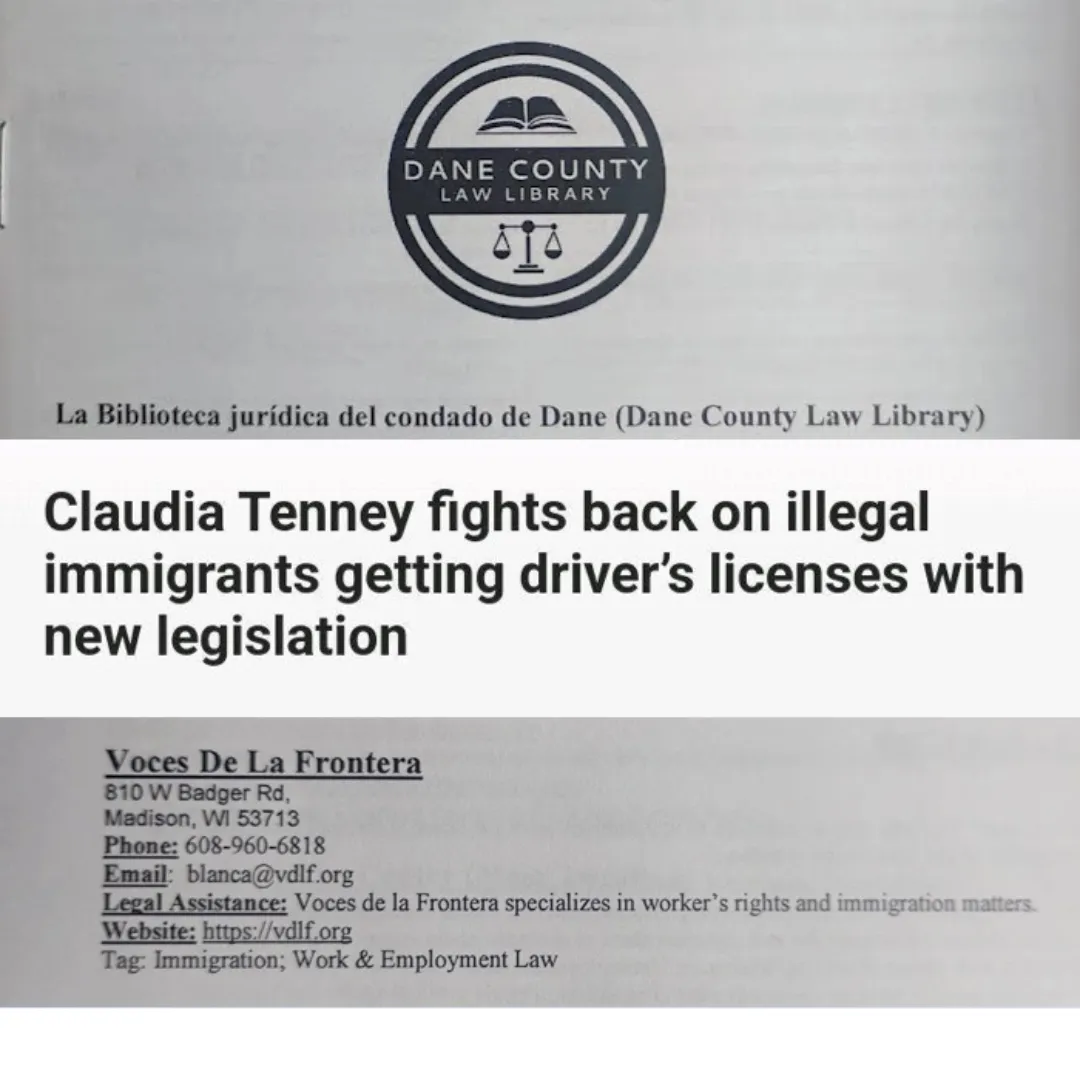
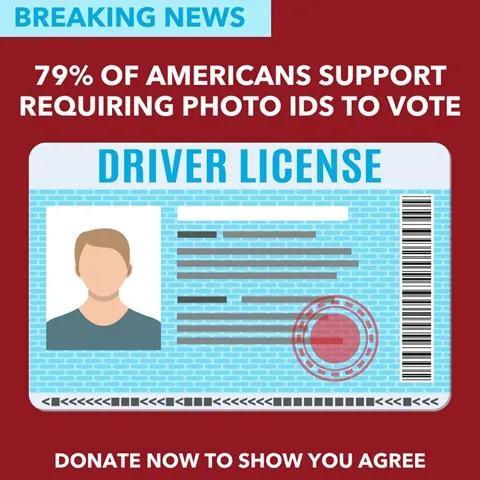

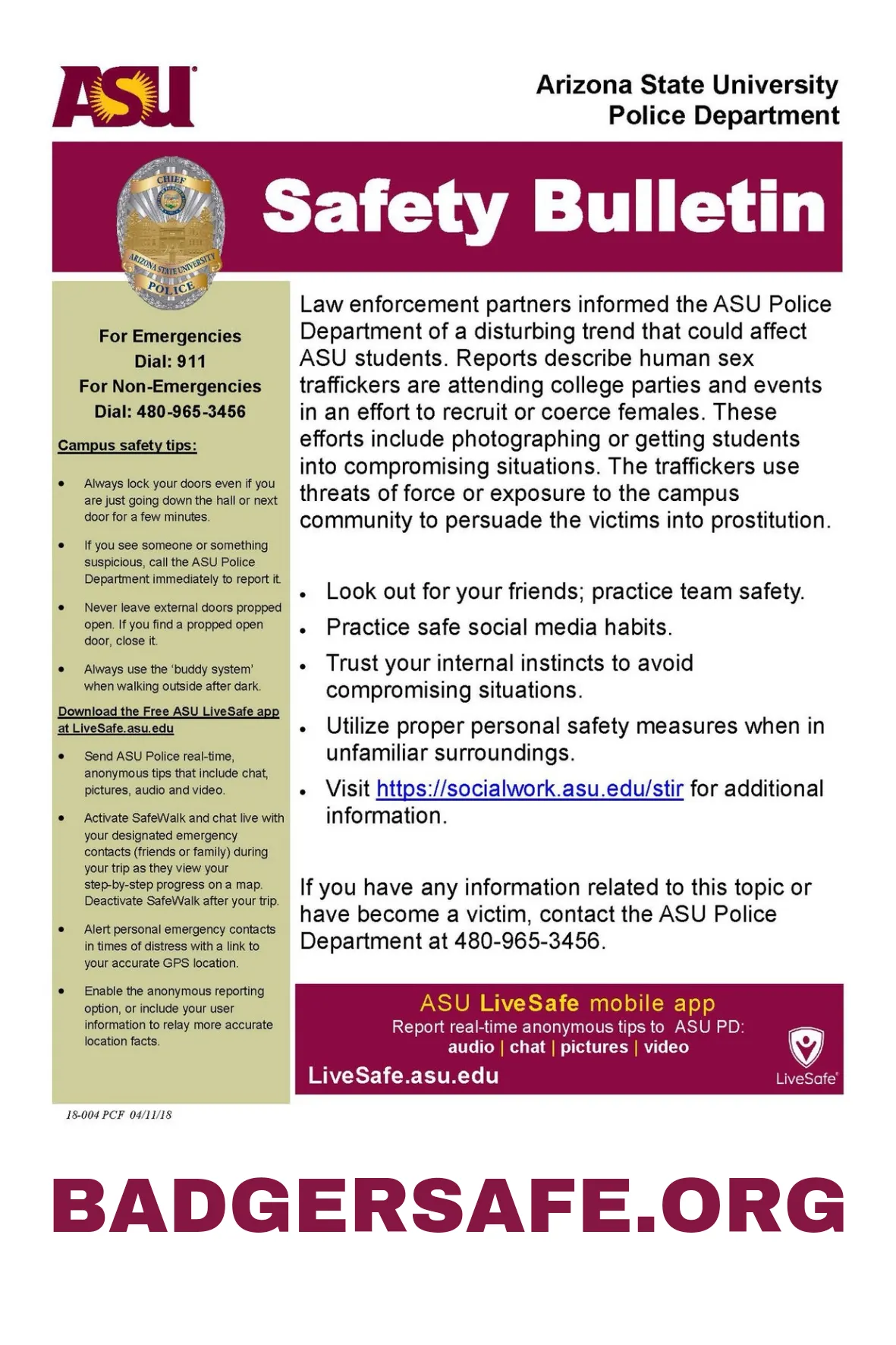


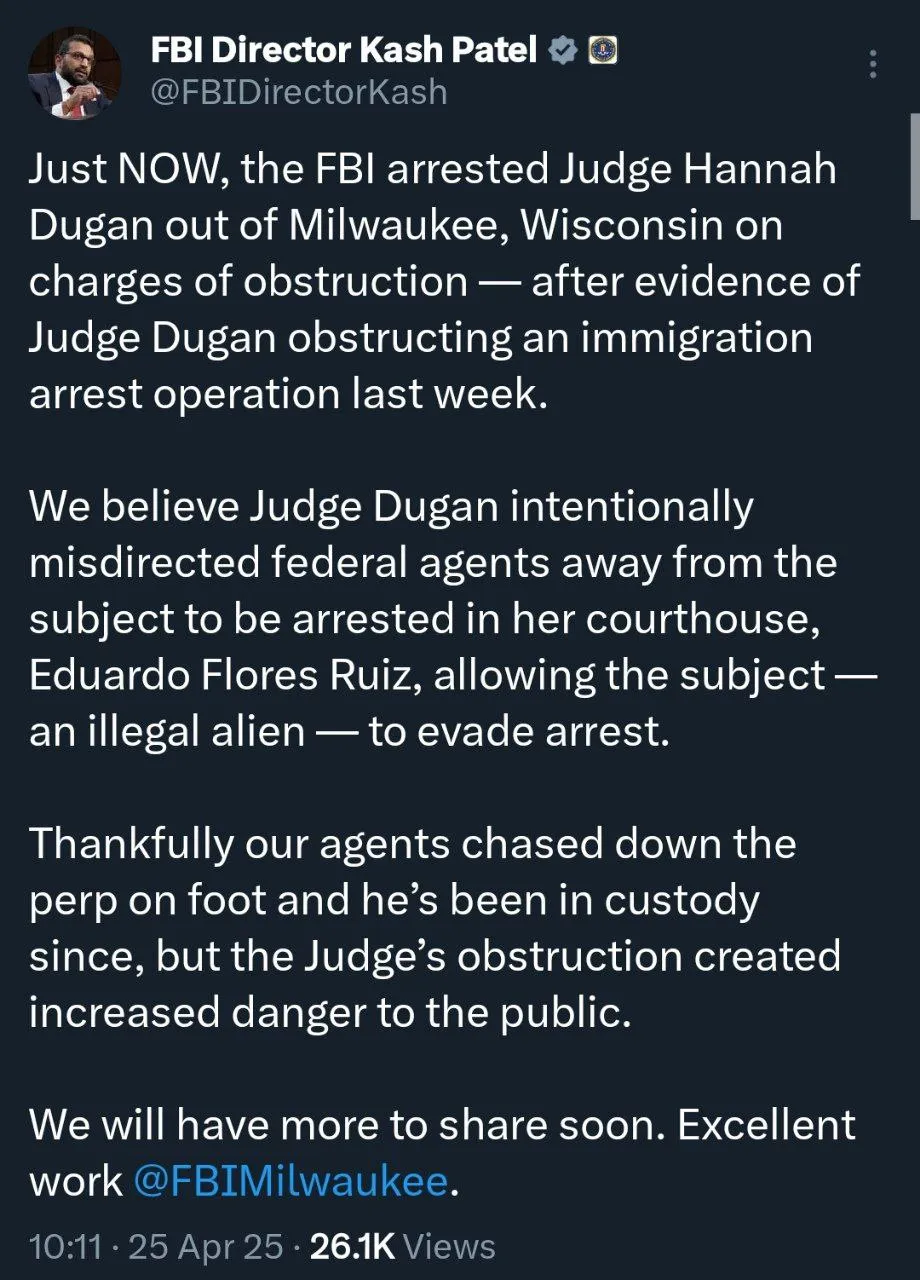

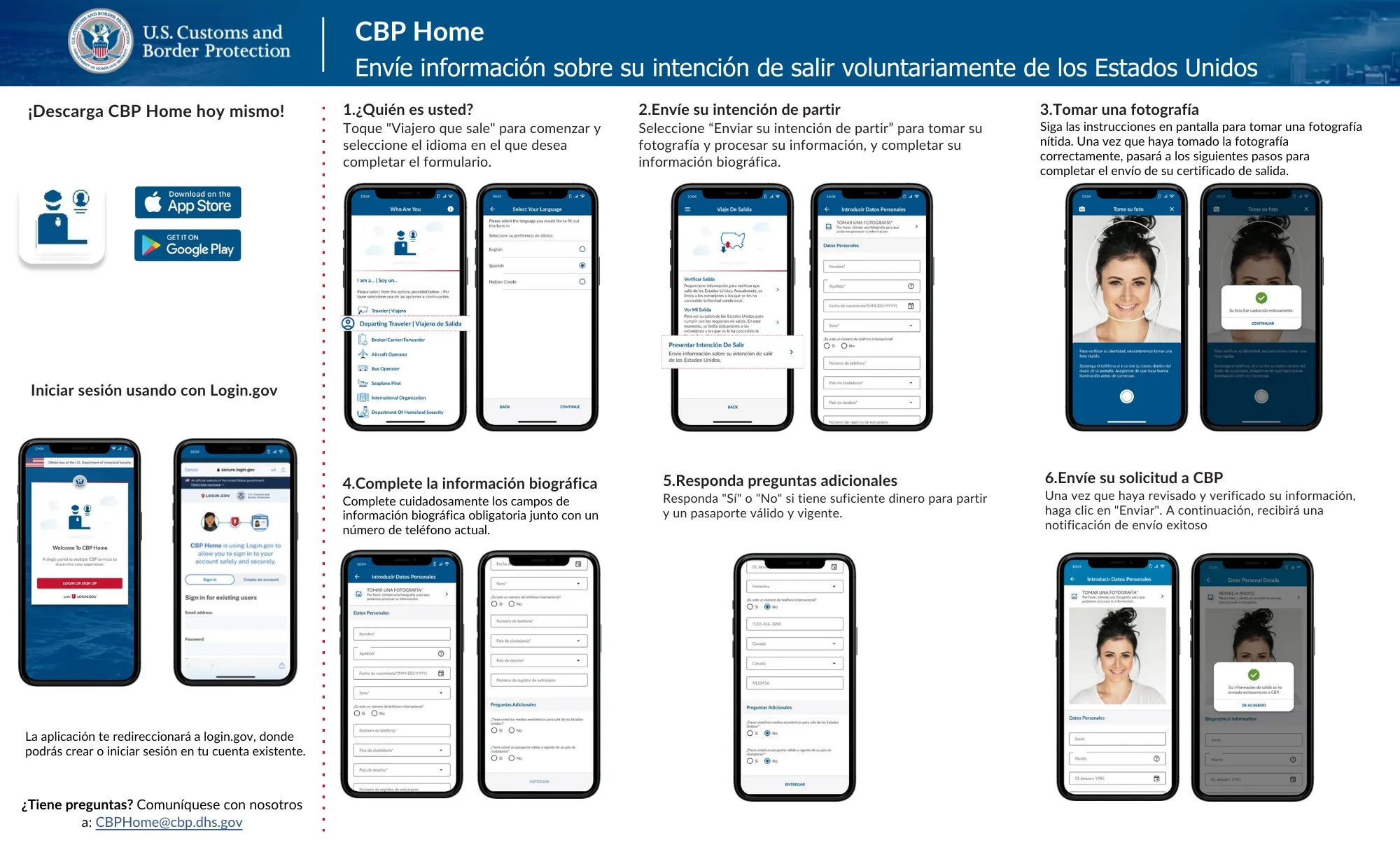

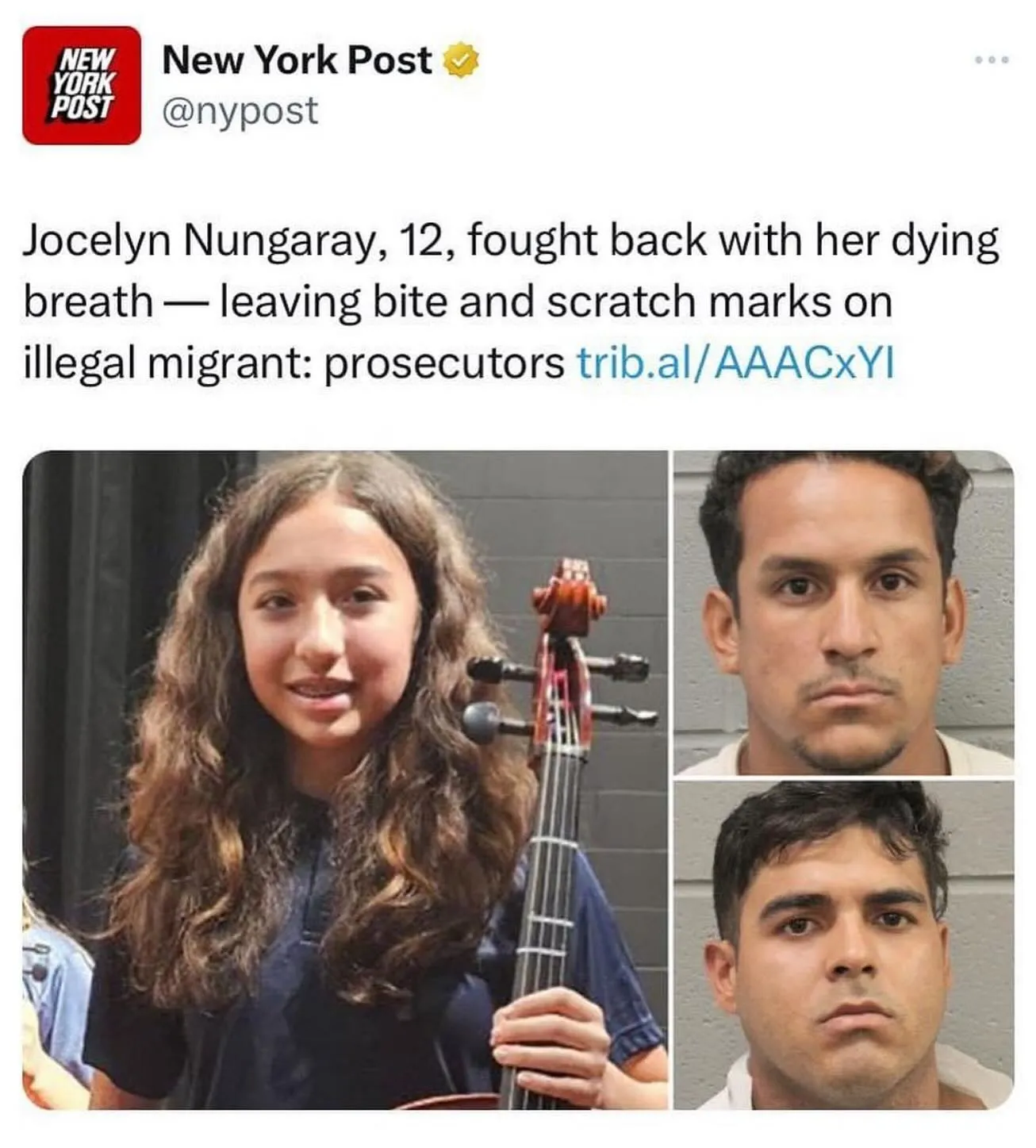



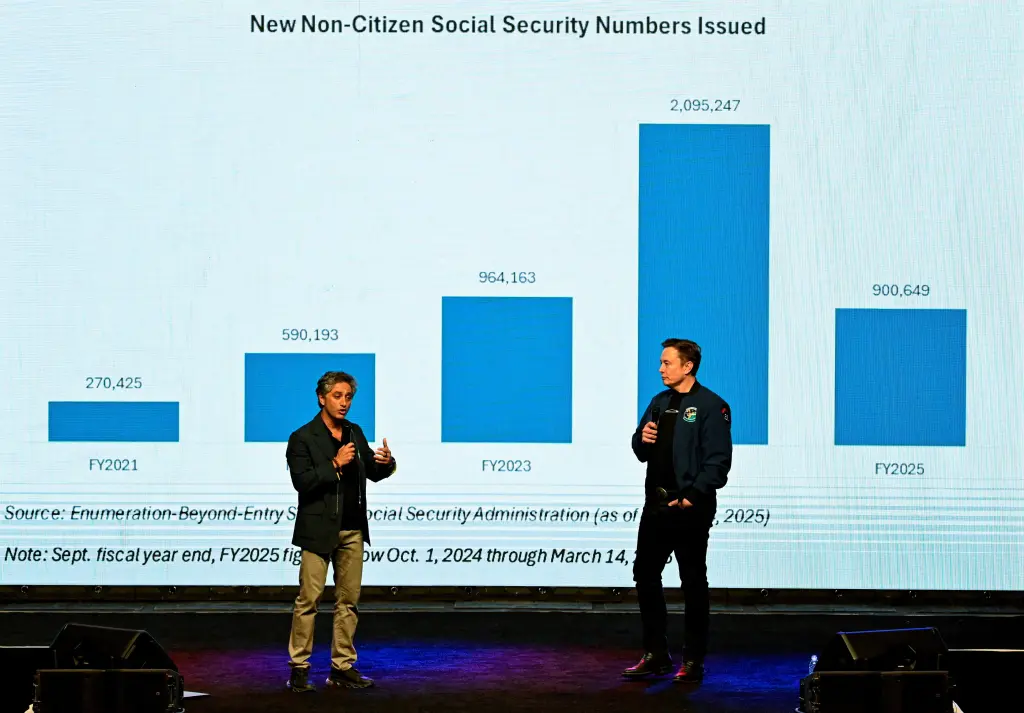
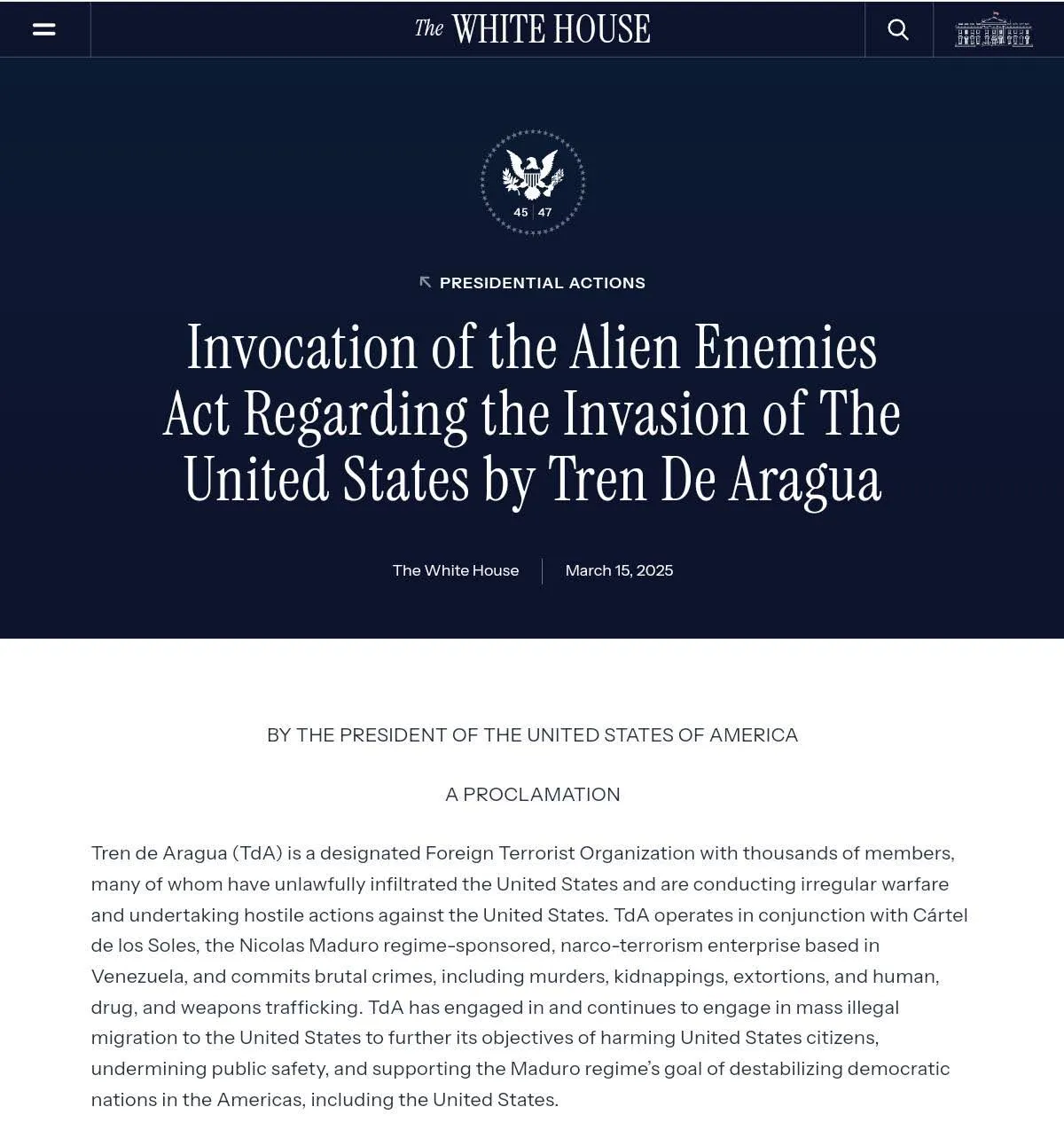


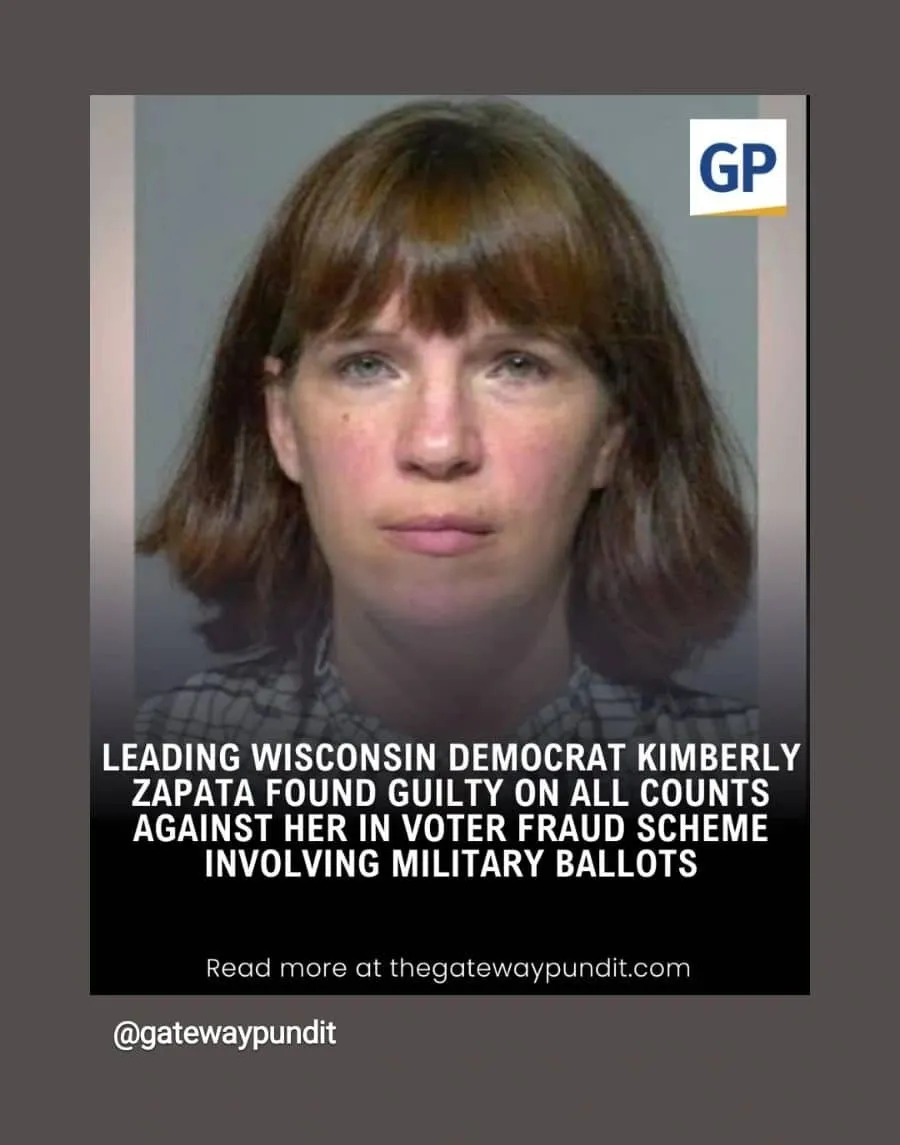
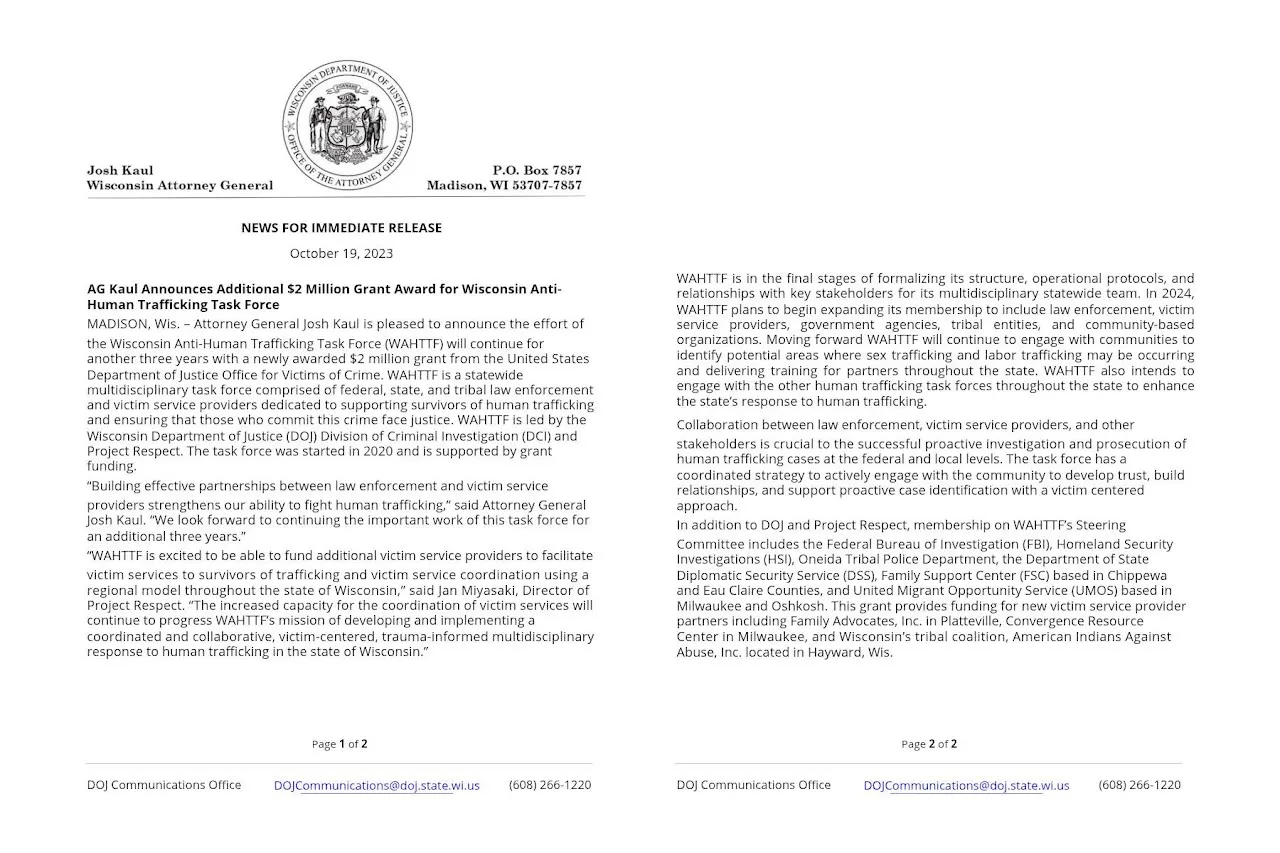

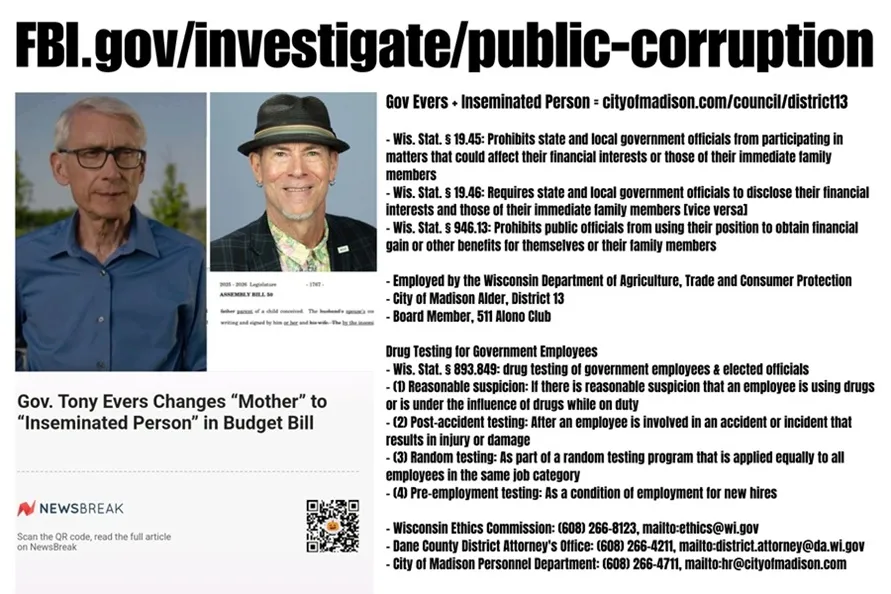
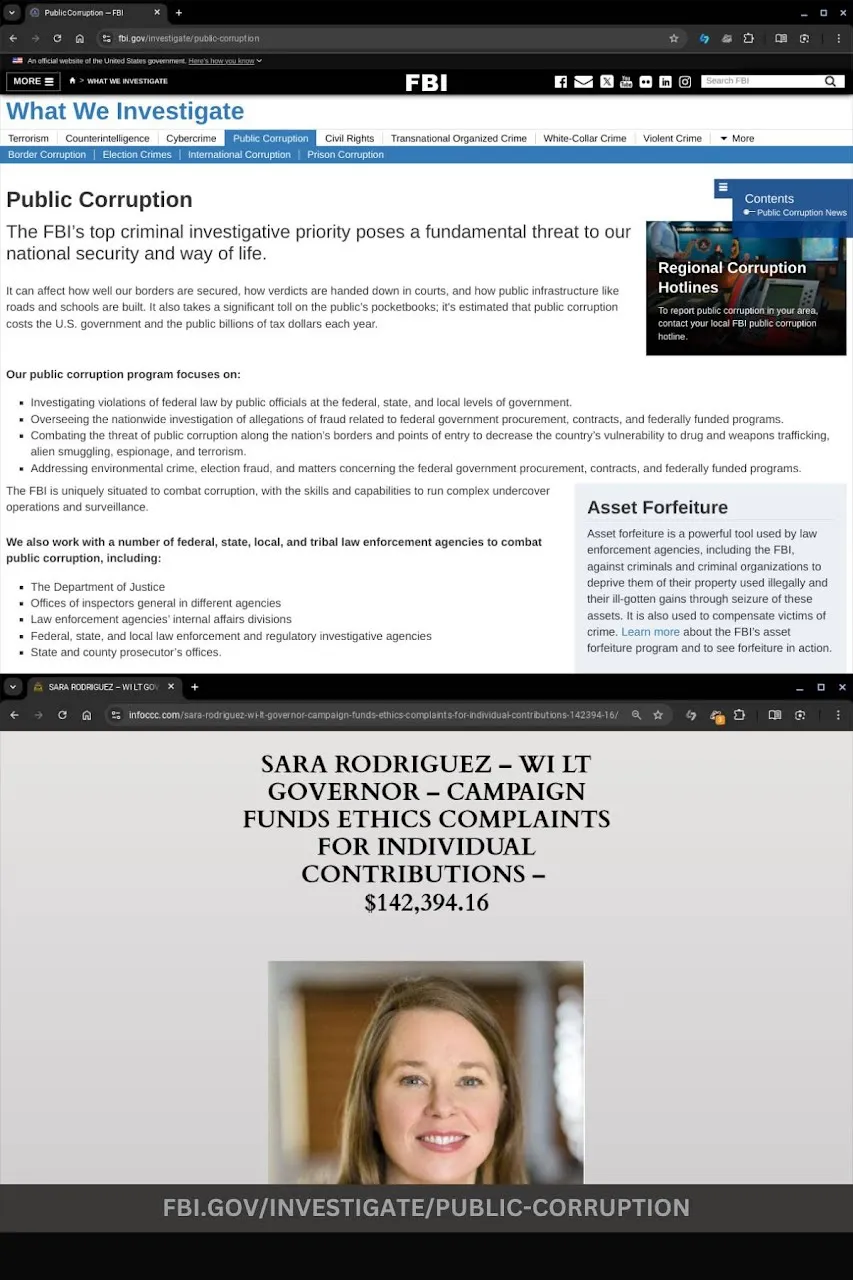



 -->
-->